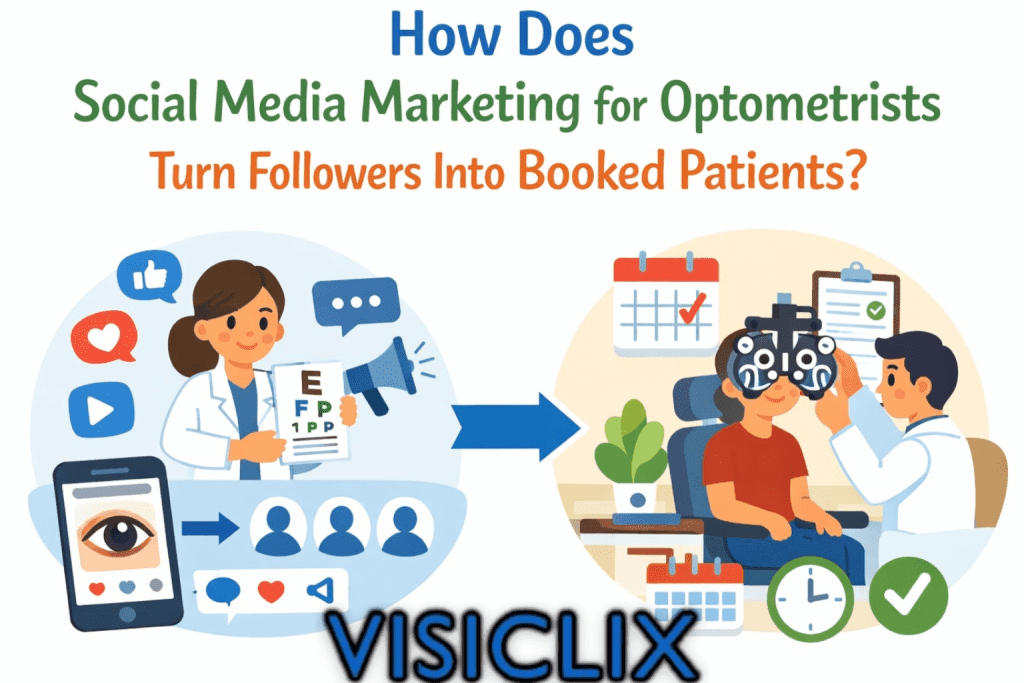
Social media marketing for optometrists helps eye clinics do three things at once: stay visible in the local market, build trust before a patient ever calls, and create more opportunities for appointments. That matters because eye care is often preventive by nature. The American Optometric Association says many eye and vision problems have no obvious signs or symptoms, and the CDC similarly notes that some common eye diseases can be detected early through comprehensive dilated eye exams. Social content gives optometrists a practical way to remind people why timely eye care matters, while also making the practice feel approachable and credible.
The strongest competitor articles get one part of this right: they offer useful post ideas, engagement suggestions, and platform advice. OptometryMarketing focuses on consistency, visuals, and combining social with broader digital marketing; WebFX leans into content ideas like polls, testimonials, and educational posts; iMatrix highlights platform selection and visual-first content; and RevolutionEHR adds ready-to-use social ideas and operational guidance for practices. The opportunity for Visiclix is to go further by connecting content to patient acquisition, conversion, compliance, and measurable ROI.
What is social media marketing for optometrists?
Social media marketing for optometrists is the use of platforms like Facebook and Instagram to attract new patients, stay connected with existing ones, educate the local community, and encourage appointment bookings. In practice, that includes organic posts, short-form video, stories, reviews, testimonials used appropriately, paid promotions, and consistent engagement through comments, messages, and profile updates.
For an optometry practice, social media should not be treated as a side project or a place to post random frame photos when someone remembers. It works best as part of a larger patient-growth system. OptometryMarketing explicitly argues that social media performs better when it is paired with SEO, digital advertising, and a strong website, and that is the right framing for most clinics. Social media creates interest and trust; your website and booking path turn that interest into action.
Why does social media marketing matter for optometry practices today?
It matters because patients often choose providers long before they speak to them. By the time someone calls your clinic, they may already have checked your reviews, looked at your Instagram, scanned your Facebook page, or compared your practice with others in the area. RevolutionEHR describes social media as part of how practices build visibility and loyalty, and that aligns with how patients increasingly evaluate healthcare brands online.
It also matters because social platforms are where many adults spend time every day. Pew Research Center reports that Facebook and YouTube remain among the most widely used platforms in the U.S., and about half of U.S. adults say they use Facebook at least once a day. For an optometry practice, that means social media is not just a branding channel. It is a repeated visibility channel that can keep your clinic in front of local families, working professionals, parents, and older adults who may need exams, updated prescriptions, or follow-up care.
How does social media marketing help optometrists attract new patients?
It helps by shortening the trust gap. A prospective patient may not be ready to book the first time they hear your name, but they may remember a helpful post about headaches and eye strain, a simple explanation of what happens during an eye exam, or a warm team introduction video. Those small impressions make your practice feel familiar, and familiarity reduces hesitation.
Social media also gives optometrists a way to educate people about needs they may not recognize on their own. The AOA says many eye problems do not show obvious symptoms, while the CDC says a comprehensive dilated exam can detect diseases in their early stages. When a clinic publishes content about glaucoma risk, diabetic eye disease, kids’ vision, or the signs that it is time for an eye exam, it turns education into demand generation. That is especially powerful in eye care because many patients do not act until they understand the risk of waiting.
A strong social presence can also support local discoverability. OptometryMarketing and iMatrix both position social as part of a broader local visibility strategy, and Terraboost similarly frames optometry marketing as a brand-awareness and patient-acquisition effort that benefits from an active digital presence. Social alone is rarely enough, but it can become the channel that keeps your practice top of mind between searches, referrals, and review checks.
Which social media platforms should optometrists focus on first?
For most clinics, Facebook and Instagram are the best starting point. Competitor articles consistently emphasize those two platforms, and that makes sense. Facebook is still highly useful for community presence, local engagement, patient updates, reviews, and family-oriented communication. Instagram is better for visual storytelling, Reels, frame showcases, office culture, and quick educational content.
The right answer depends on who you are trying to reach and how much time your team can realistically dedicate. If your clinic serves a broad age range, Facebook is often the most practical anchor channel. If your clinic has a strong optical component, younger audience segments, or appealing in-office visuals, Instagram deserves equal weight. If you have the internal resources to create short, personable video consistently, then Reels and similar short-form formats deserve real attention because they give educational content more reach than static posting alone. iMatrix specifically points to Reels as a strong visibility opportunity, which fits the direction of visual-first social content.
A smart rule for most optometrists is this: master two channels before you expand to a third. A steady Facebook and Instagram presence usually outperforms scattered activity across five platforms.
What types of social media content work best for optometrists?
The best content for an eye clinic sits in five buckets: education, service awareness, trust-building, community relevance, and conversion-focused reminders. Competitors cover many of these ideas separately, but organizing them into buckets makes execution much easier and keeps your content from feeling repetitive.
Educational content answers common questions patients already have. This includes posts about eye strain, children’s eye exams, signs of changing vision, dry eye symptoms, contact lens care, and what happens during an exam. These posts perform well because they are useful even before a person is ready to book.
Service-awareness content makes your offerings easier to understand. A post about what to expect during a contact lens fitting or the difference between a screening and a full exam can remove confusion that otherwise delays bookings.
Trust-building content humanizes the practice. Staff introductions, doctor Q&As, behind-the-scenes videos, patient experience posts, and clinic walkthroughs all help reduce anxiety and make the office feel more familiar.
Community and seasonal content keeps your brand timely. Back-to-school vision reminders, allergy-season eye tips, summer sunglasses guidance, and screen-time posts around exam periods or return-to-school months are all relevant examples.
Conversion-focused content makes the next step clear. These are your scheduling reminders, new frame arrivals, insurance/payment explainers, and posts tied to specific service pushes. The key is to keep these helpful, not pushy.
How often should an optometry practice post on social media?
An optometry practice should post often enough to stay familiar, but not so often that quality drops. OptometryMarketing suggests consistency over volume and mentions four posts per month as a workable baseline for practices that need a starting point. That is a reasonable minimum, especially for smaller clinics with limited internal marketing capacity.
For stronger results, most practices should aim a little higher. Two to four feed posts per week is usually a realistic target, with Stories added several times a week and short-form video used whenever possible. That cadence gives you enough repetition to stay visible without overwhelming your audience or your staff. More importantly, it creates enough volume to test what actually drives profile visits, messages, clicks, and appointment requests.
The best posting schedule is the one your team can maintain for six months, not six days. A consistent plan built around reusable content buckets almost always beats bursts of creative effort followed by long silence.
How do optometrists create a social media plan without wasting time?
The easiest way is to stop treating every post like a new idea. Create a repeatable system instead.
Start with one clear goal. Most clinics want one of three outcomes: more new-patient appointments, more recall/reactivation bookings, or stronger local brand awareness. Once the goal is clear, choose one or two platforms and build your content calendar around five recurring buckets: education, services, trust, community, and promotion.
Then batch content once a month. Spend one afternoon gathering photos, filming a few short videos, writing captions, and scheduling posts. RevolutionEHR’s practical approach to calendars and ready-to-post ideas points in this direction, and it is especially useful for clinics that do not have a full-time marketing manager.
Finally, connect every post to a simple next step. That might be “Book your exam,” “Send us a message,” “Call the office,” or “Tap the link in bio.” Social media gets far more efficient when every piece of content knows what action it is trying to encourage.
What are 30 effective social media post ideas for optometrists?
The strongest post ideas are the ones that answer patient questions, show your clinic’s personality, and move people closer to booking. Here are 30 ideas grouped in a way that makes them easier to use.
What educational post ideas help eye clinics build trust?
- What happens during a routine eye exam?
- How often should adults get an eye exam?
- How often should kids get an eye exam?
- What are the early signs you may need new glasses?
- Can too much screen time affect your eyes?
- What is digital eye strain?
- Why do regular eye exams matter even if vision seems fine?
- What eye conditions can be detected early during an exam?
These posts work because they align directly with AOA and CDC guidance on preventive eye care and early detection. They also meet patients where they are: curious, mildly concerned, and often not ready to call until something makes the topic feel relevant.
What service-focused post ideas help more patients book?
- What should you expect at your first visit to our eye clinic?
- How does a contact lens fitting work?
- What is the difference between a vision screening and a full eye exam?
- How can an eye clinic help with dry eye symptoms?
- When should you update your prescription?
- Are blue light lenses worth it for your daily routine?
- What should parents know about pediatric eye exams?
- What should contact lens wearers know about proper hygiene?
These are strong because they reduce uncertainty. In healthcare, uncertainty slows action. Helpful service posts let patients picture the experience before they commit to it.
What brand-building post ideas make an optometry practice feel more personal?
- Who will you meet when you visit our clinic?
- Why did our optometrist choose eye care?
- What does a typical day in our clinic look like?
- How do we help nervous first-time patients feel comfortable?
- What do patients say about their visit here?
- How does our team help children feel at ease during exams?
This category matters because people are not just choosing a provider; they are choosing a care experience. Trust-building content can be the deciding factor between two similar clinics.
What community and seasonal post ideas keep your clinic relevant?
- How can parents spot vision issues that affect school performance?
- What eye care habits should students build before school starts?
- How can allergy season affect your eyes?
- What eye health items should you pack while traveling?
- How can drivers reduce eye strain during long commutes or night driving?
These posts tend to perform well because they match real-life moments. They also make your clinic feel present in the community instead of purely promotional.
What promotional post ideas still feel helpful instead of salesy?
- When is the right time to book your next eye exam?
- Which new frames just arrived at our clinic?
- What insurance or payment options should patients know before visiting?
Promotional content works better when it answers a practical question. WebFX and OptometryMarketing both lean into useful CTAs and showcase-based content, but this version works harder because it connects the promotion to a clear patient need.
How can optometrists turn engagement into actual appointments?
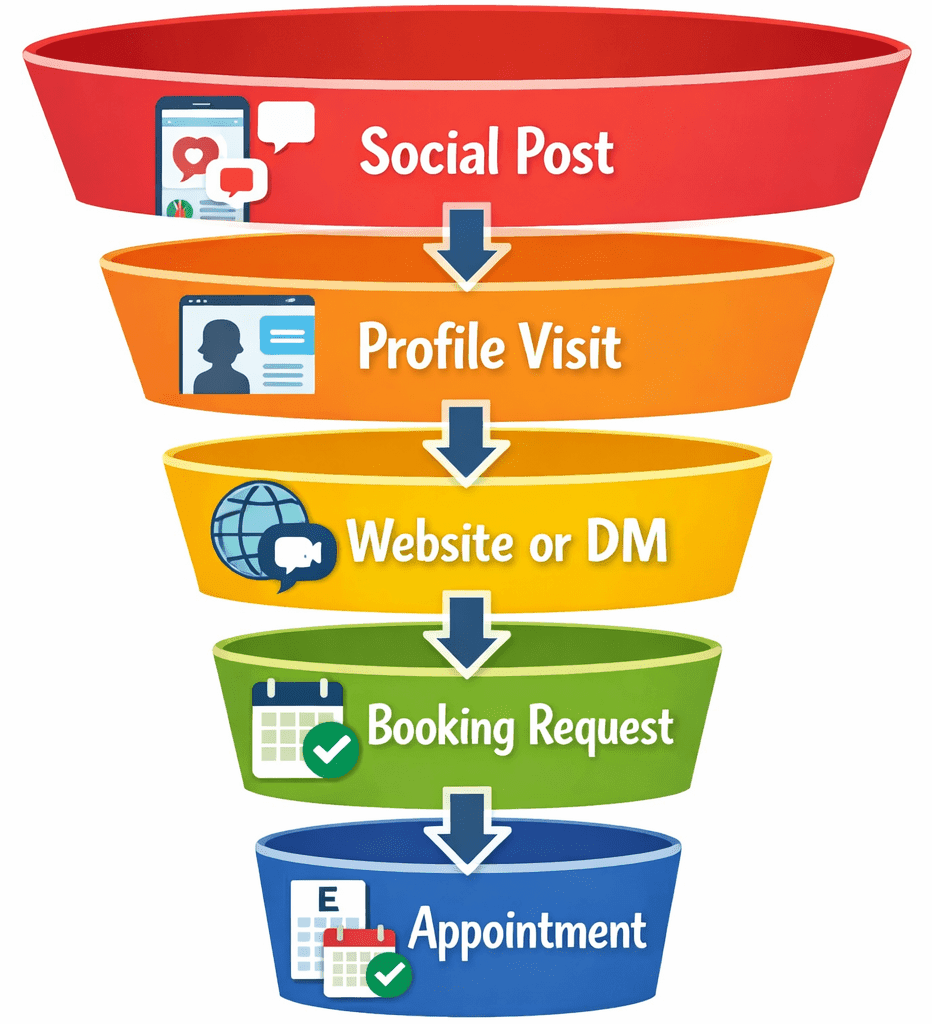
This is the section many competitor articles underplay. Likes and comments are nice, but booked patients are the real goal.
The first step is to make the next action frictionless. Every clinic should have a booking page that is easy to find, mobile-friendly, and aligned with what the social post promises. If a post is about kids’ eye exams, the click should lead to a page that reinforces that service, not a generic homepage.
The second step is to use CTAs consistently. Not every post needs a hard sell, but many should include a simple direction such as “Schedule your annual eye exam,” “Message us with questions,” or “Call to reserve your contact lens fitting.” OptometryMarketing’s broader point that social works best when tied to a strong website is critical here. Social should warm people up; your site should convert them.
The third step is to use messaging intentionally. Some patients would rather send a quick DM than call. Social can capture those lower-friction inquiries, but someone on your team needs a process for fast follow-up. Engagement is only valuable if it leads somewhere.
What should optometrists post about eye exams, glasses, and contact lenses?
These are the three subjects most clinics can return to every month without exhausting audience interest.
For eye exams, focus on prevention, early detection, and the patient experience. AOA and CDC guidance supports this strongly: many eye problems are not obvious early, and comprehensive exams can detect issues before they become more serious. That makes exam-awareness content both educational and commercially relevant.
For glasses, create content that mixes style and function. Frame try-ons, “which frames suit this face shape” posts, anti-reflective lens explanations, and updated prescription reminders all work well. These posts are especially strong on Instagram because they are visual and easy to consume.
For contact lenses, focus on comfort, safety, and lifestyle fit. Proper care, replacement habits, fitting expectations, and common mistakes are all high-value topics. This category tends to drive both new-patient interest and follow-up conversations from existing patients.
How do patient education posts build trust for optometrists?
They build trust because they show expertise without pressure. Instead of saying, “Choose our clinic,” educational posts show why your clinic knows what it is doing. A clear explanation of diabetic eye disease, children’s visual development, dry eye symptoms, or the importance of routine exams positions your team as a trusted guide.
That matters in eye care because many patients delay appointments until symptoms interfere with daily life. Both the AOA and CDC make the same core point: eye problems can develop without obvious warning signs, and comprehensive exams help identify issues early. Educational content helps bridge the gap between “I think I’m fine” and “I should probably get this checked.”
Educational posting also increases the odds that your content gets saved, shared, or remembered. The best clinic social content does not just collect attention. It gives people language for a problem they have been ignoring.
Are before-and-after photos, testimonials, and patient stories effective for eye clinics?
Yes, they can be extremely effective, because they reduce uncertainty and provide social proof. Terraboost notes that patient testimonial content is powerful in healthcare marketing because it encourages prospective patients to trust the provider. That logic applies well to optometry too, especially when the stories are specific, authentic, and connected to outcomes patients care about.
But healthcare practices also need to be careful. HHS guidance makes clear that healthcare providers cannot expose protected health information to media or similar outside parties without prior written authorization, and patient-facing content decisions should always respect HIPAA and consent requirements. In practical terms, that means optometry practices should never assume a happy patient story can be posted casually. Get proper authorization, confirm what is approved for use, and avoid revealing details the patient did not explicitly authorize.
When handled properly, testimonials and patient stories can become some of the highest-trust content in your mix. They work best when they sound human, not overly polished.
How should optometrists use video, Reels, and Stories?
Optometrists should use short-form video to make eye care more understandable and the clinic more familiar. This format is ideal for doctor intros, “what to expect” clips, frame try-ons, contact lens tips, myth-busting, and quick answers to common questions. iMatrix specifically highlights Reels as a discovery opportunity, and Meta Business tools also provide dedicated insight reporting for video and Reels so businesses can measure what is working.
Stories are useful for lighter, more frequent touchpoints. They are great for same-day reminders, quick polls, event moments, new frame arrivals, office culture, or “one opening left this week” style updates.
The biggest mistake clinics make with video is trying to produce ads when they should be producing clarity. The best-performing eye clinic videos are usually simple, helpful, and personable. A smartphone, good lighting, and a clear message are enough.
Can paid social media ads work for optometrists?
Yes, but they work best when the basics are already in place. OptometryMarketing takes a balanced view here, arguing that social media should not consume all of a practice’s energy if the website and broader digital foundation are weak. That is smart advice. Paid social can amplify a good message, but it rarely fixes a weak one.
Paid social is especially useful for local awareness campaigns, seasonal pushes, promotions tied to specific services, and remarketing to people who already know your brand. It is most effective when the audience is local, the offer is clear, and the landing experience is relevant. Terraboost also emphasizes the targeting value of social advertising in healthcare contexts, which is one reason paid social can work well for community-based optometry campaigns.
The key is to measure bookings, not just clicks. A boosted post that generates likes but no appointment activity is not a win.
How do optometrists measure social media success?
Optometrists should track social media success in layers.
At the visibility level, monitor reach, impressions, profile visits, and follower growth. These tell you whether your content is being seen.
At the engagement level, look at comments, shares, saves, DMs, and link clicks. These tell you whether people are responding.
At the business level, track website visits from social, appointment requests, calls, messages, form submissions, and actual booked patients. These tell you whether social is contributing to revenue.
Meta Business Suite is useful here because it provides insights for organic and paid efforts across Facebook and Instagram in one place, including audience data and content performance metrics. That makes it easier for clinics to identify which formats, topics, and messages deserve more investment.
The most important shift is mindset: stop asking, “Did this post perform well?” and start asking, “Did this content move the right people toward action?”
What mistakes do optometrists make with social media marketing?
The first mistake is inconsistency. A half-active account sends the wrong signal. It can make a practice look inattentive even when the in-office care is excellent. Competitor guides repeatedly stress consistency for good reason.
The second mistake is being too promotional. If every post asks people to book now, your audience will tune out. Educational and trust-building content should do most of the work, with promotional posts used strategically.
The third mistake is posting without a conversion path. A social feed can look polished and still fail because it does not direct people anywhere meaningful.
The fourth mistake is weak visuals or generic messaging. Eye care is inherently visual. Clinics should use clean photos, readable graphics, and straightforward captions that sound human.
The fifth mistake is ignoring compliance and consent. Testimonials, photos, and patient stories can help, but only when used appropriately and with proper authorization where needed.
How can optometrists build a month of social content in one afternoon?
Start by choosing four weekly themes for the month: one educational post, one service post, one trust-building post, and one promotional or seasonal post each week. That gives you 16 core ideas quickly.
Next, gather content in batches. Take team photos, record three short videos, photograph the office and optical area, and collect approved patient feedback snippets. Write all captions in one sitting, then schedule them.
After that, turn one strong idea into multiple formats. A post about digital eye strain can become a Reel, a carousel, a Story poll, and a doctor tip video. This is where time savings multiply. You do not need 20 separate ideas every month. You need a few strong topics used intelligently.
Finally, review your previous month’s performance. Meta Business Suite insights can show which content types and audiences are responding, so your next batch gets better instead of just different.
What is the best social media platform for optometrists?
For most clinics, the best platform mix is Facebook plus Instagram. Facebook supports local reach, updates, reviews, and broad demographic coverage, while Instagram is ideal for visual storytelling, Reels, and optical or lifestyle content.
How many times per week should an eye clinic post?
A good target is two to four feed posts per week, plus Stories throughout the week. Smaller clinics can start with one consistent weekly schedule and build from there. OptometryMarketing’s baseline recommendation supports starting small if needed, but consistency matters more than volume.
What should optometrists post on Instagram?
Optometrists should post frame content, Reels, doctor tips, behind-the-scenes clips, quick education, contact lens guidance, and patient-friendly reminders. Instagram performs best when the content is visual, simple, and easy to understand.
Do Facebook ads work for optometrists?
Yes, especially for local awareness, seasonal service campaigns, and remarketing. They work best when the offer is clear, the audience is local, and the clinic has a strong landing page or booking path.
How do optometrists get more appointments from social media?
They combine useful content, clear CTAs, strong profile setup, mobile-friendly booking paths, and fast follow-up on DMs or inquiries. Social media warms interest, but the conversion process must be just as strong.
Can a small eye clinic manage social media without a full-time marketer?
Yes. The key is to use a repeatable monthly system, limit platform sprawl, batch content, and focus on a few core content buckets instead of trying to post everything everywhere. RevolutionEHR’s calendar-driven approach supports that kind of practical execution.
What content should an optometrist avoid posting?
Avoid anything that reveals patient information without proper authorization, low-quality or confusing health claims, inconsistent branding, or overly aggressive promotional content that does not add value. HHS guidance is especially important when clinics use patient-facing content.
How long does social media marketing take to show results?
Organic social usually builds gradually. Most clinics see the strongest effect when social is sustained over time and tied to a broader digital strategy that includes a strong website, local visibility, and clear conversion points. Competitor guidance consistently supports that integrated approach.
Conclusion
Social media marketing for optometrists works best when it is treated as a patient-growth system, not a box to check. The goal is not just to fill a feed with eye-care content. The goal is to stay visible, educate the community, build trust before the first appointment, and make it easy for interested patients to take the next step.
For eye clinics, that combination is especially powerful because eye care is both personal and preventive. Many people delay exams, do not recognize early symptoms, or need reassurance before they book. The right social strategy answers those questions before they are asked, makes your clinic feel familiar, and turns everyday content into a steady source of appointments.
Why Visiclix is Your Ideal Choice for Social Media Marketing for Optometrists?
Visiclix is well positioned to help eye clinics get more from social media because success in this space requires more than creative post ideas. It requires a clear strategy, patient-focused messaging, a practical content system, and a conversion path that turns attention into appointments. For optometrists, that means balancing education, trust, and local visibility without losing sight of ROI.
A generic social media agency may know how to schedule posts, but Visiclix can bring a stronger healthcare-growth lens to the work. That includes content planning tied to real patient questions, campaign structures that support bookings, and a broader digital approach that connects social with website performance, local search presence, and measurable business outcomes. For a clinic that wants more than vanity metrics, that difference matters.
Ready to Grow Your Eye Clinic with Visiclix?
If your practice wants a social media plan that does more than stay active, Visiclix can help build one that supports visibility, trust, and booked patients. From content strategy and monthly planning to conversion-focused messaging and full-funnel digital support, the right system can turn your social presence into a real growth channel.