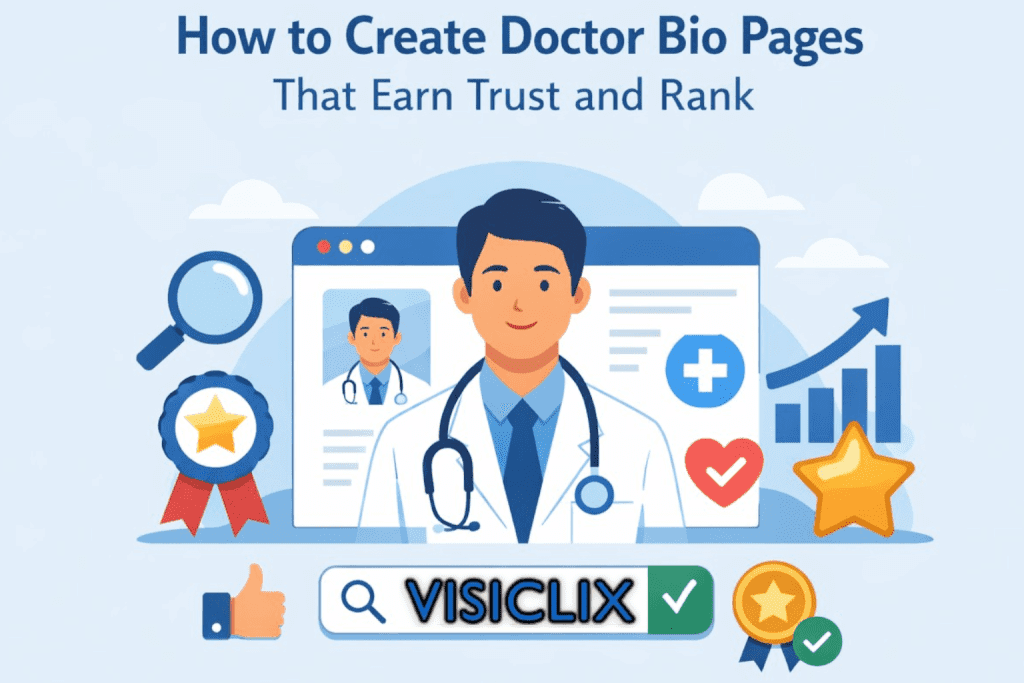
Doctor bios support SEO because they give search engines a dedicated, crawlable page about a specific provider. That creates a more precise relevance signal than a broad team page, especially when the page includes specialty details, services, affiliations, and location context. Google’s SEO documentation repeatedly emphasizes that search systems rely on crawlable links, understandable page content, and helpful information to discover and interpret pages.
These pages can also rank for valuable long-tail searches, including physician name searches, specialty-plus-location queries, and searches that combine provider qualifications with patient intent. Even when a doctor bio is not the first page a visitor lands on, it often becomes the page that confirms the decision. That makes it important not only for traffic, but for conversion. This is an inference based on how provider-specific pages align with identifiable search intent and trust evaluation behavior.
Another SEO advantage is internal linking. Google states that links help it discover pages and understand relevance. A doctor bio that links naturally to specialty pages, treatment pages, insurance pages, location pages, and scheduling pages strengthens site structure while helping users move deeper into the site.
What Trust Signals Should Every High-Performing Doctor Bio Include?
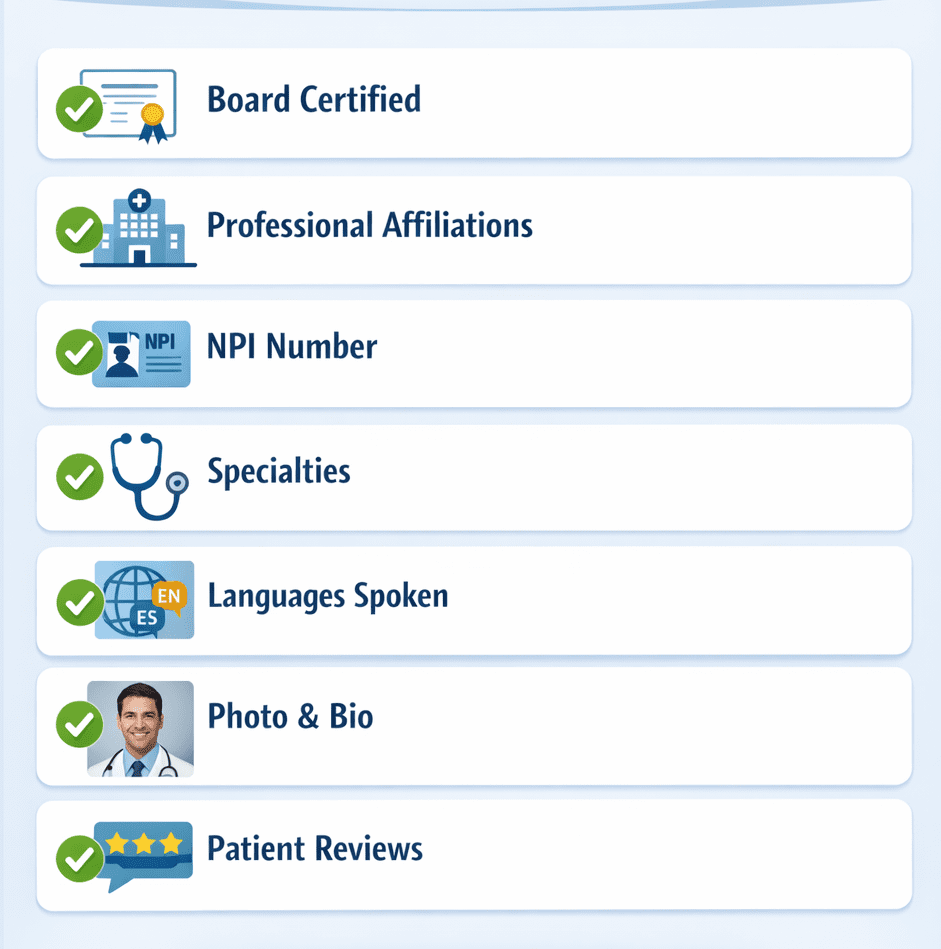
Every strong doctor bio should include the provider’s full name, title, specialty, and a professional headshot near the top of the page. Those elements make the page immediately understandable to both users and search engines and help establish that the profile represents a real, identifiable medical professional.
The page should also include education, residency or fellowship training where relevant, board certifications, hospital affiliations, and conditions or services treated. These are the details patients scan for when evaluating expertise, and they are exactly the sort of transparent creator information that supports stronger trust signals on YMYL content.
For U.S. practices, the doctor’s National Provider Identifier can also reinforce legitimacy. CMS explains that NPPES assigns and manages unique identifiers for healthcare providers, and the public NPI Registry allows active NPI records to be searched. Including or validating NPI data can support accuracy and consistency across provider information.
Additional trust signals can include languages spoken, accepted patient types, publications, awards, areas of clinical interest, and a short care philosophy. When compliant and appropriate, patient review signals, star ratings, or video introductions may add reassurance as well, though they should support the page rather than overwhelm it.
Most importantly, the trust signals must be specific. “Compassionate and dedicated physician” is not a trust signal by itself. “Board-certified dermatologist who treats acne, rosacea, and skin cancer screenings in two Chicago locations” is. Specificity builds confidence faster than adjectives do.
How Should a Doctor Bio Page Be Structured to Rank and Convert?
The strongest layout starts with a clear H1 that includes the doctor’s name and primary specialty. Under that, add a short summary that tells visitors exactly who the provider is, what they treat, and where they practice. Google’s title and snippet documentation makes clear that search appearance is influenced by page titles, visible page content, and descriptive information, so clarity here helps both rankings and clicks.
Below the summary, organize the page into scannable sections: credentials, specialties or services, conditions treated, locations, care philosophy, FAQs, and a visible appointment CTA. This structure works well because patients often scan first and read more deeply only after they see enough proof to continue. It also gives Google a cleaner page structure to parse.
Use internal links throughout the page, but only where they help the user. Link the doctor’s specialty to the relevant service page, the practice address to the location page, and scheduling text to the appointment page. Google recommends crawlable links and relevant anchor text because links help search systems find pages and determine relevance.
On mobile, the page should surface the most important trust details above the fold. Google strongly recommends mobile-friendly pages and uses mobile-first indexing, so the mobile experience is not an afterthought. For doctor bios, that means the user should not need to scroll through long introductions just to find the provider’s specialty, credentials, or booking option.
What Makes a Doctor Bio Credible Instead of Generic?
A credible bio uses verifiable detail. It names the provider’s specialty, training, certifications, and care focus in concrete language. It explains what kinds of patients or conditions the doctor commonly treats. It avoids inflated claims and vague superlatives unless they are backed by a real award, credential, or distinction.
A generic bio does the opposite. It leans on filler language, repeats broad marketing phrases, and says little that would help a patient choose one doctor over another. Google’s SEO guidance warns against low-value, copied, or unhelpful content, and in healthcare that weakness is even more costly because users and search systems both expect higher-quality signals.
The practical test is simple: if you removed the doctor’s name from the page and it could describe almost any provider, the bio is too generic to do its job. A high-converting bio should feel distinctly tied to one real clinician.
How Do Doctor Bio Pages Support E-E-A-T on Medical Websites?
Doctor bio pages are one of the most direct ways to support E-E-A-T because they show who the provider is and why they are qualified to be associated with the site’s medical content. Google’s Search Quality Rater materials say raters consider Experience, Expertise, Authoritativeness, and Trust when evaluating page quality, and health information is explicitly treated as YMYL content.
On a medical site, that means anonymous or lightly attributed content is a missed opportunity. A complete physician page helps connect the content to a real expert, which supports site-wide trust. Even when a bio page itself is not the page ranking for a treatment keyword, it can reinforce the credibility of the broader website through transparent authorship and professional identity. This is an inference from Google’s documented emphasis on creator transparency and trust in high-stakes topics.
Adding accurate schema can strengthen the machine-readable side of this. Schema.org includes a Physician type, and Google states that structured data helps it understand page content. While structured data does not guarantee rich results, it can make the page easier for search systems to interpret when it is implemented according to Google’s guidelines.
Can Doctor Bio Pages Help Local SEO?
Yes, doctor bio pages can help local SEO when they naturally connect the provider to real practice locations, services, and local relevance signals. A bio page that clearly states where the doctor practices, links to the corresponding location page, and aligns with consistent directory and NPI data can support local discovery.
This is especially useful for searches that combine provider identity with place-based intent, such as a doctor’s name plus a city or neighborhood, or a specialty plus a specific location. The location should feel contextual, though. Repeating city names unnaturally weakens trust and usually hurts the page more than it helps. Google’s people-first guidance is a useful standard here: write for the patient first, then optimize the page cleanly around that content.
What On-Page SEO Elements Should You Optimize on a Doctor Bio Page?
Start with the title tag. Google explains that title links are critical in giving users a quick insight into a result, even though Google may generate title links from several sources. A clear title such as “Dr. Jane Smith, MD | Pediatrician in Austin” gives both search engines and users a strong summary of the page.
Next, write a useful meta description. Google says it primarily generates snippets from on-page content, but it may use the meta description when that text describes the page better than other content. For a doctor bio, that means the description should summarize qualifications, specialty, and location in a natural way.
Images matter too. Google’s image SEO documentation emphasizes helping Google discover and understand images, and accessible image descriptions also improve usability. A physician headshot should use a descriptive filename and sensible alt text, not something generic like “doctor-photo.jpg.”
Structured data should be part of the build as well. Google documents how structured data helps search systems understand content, and Google specifically allows FAQPage markup on health-focused and government-focused FAQ content when used appropriately. For doctor bios, schema and FAQ markup can improve clarity and eligibility for enhanced search appearances, though Google does not guarantee a specific result format.
Finally, optimize the page for internal links, mobile usability, and page experience. Google notes that page experience can contribute to search success when there are many similarly helpful results, and mobile-friendly implementation is strongly recommended.
Are Individual Doctor Pages Better Than a Single Team Page?
In most cases, yes. Individual doctor pages are usually better because each provider gets a unique, indexable page that can rank for name-based and specialty-relevant searches. That gives the site more opportunities to match how patients actually search for providers.
A team page still has value, but it works best as a hub rather than a replacement. It should introduce the practice’s providers at a glance and link to each full bio page. That creates a stronger site architecture for users and search engines alike.
What Common Doctor Bio SEO Mistakes Undermine Trust?
One of the most common mistakes is publishing thin bios with only a name, title, and one sentence of copy. That is rarely enough to establish expertise or answer real patient questions. In healthcare, thin content is not just a missed SEO opportunity; it can weaken trust.
Another frequent mistake is duplicate content across provider pages. Google’s SEO Starter Guide stresses uniqueness and originality, and doctor bios should reflect the actual differences between clinicians, not just reuse a template with swapped names.
Other issues include outdated credentials, missing locations, no internal links, no clear CTA, poor mobile formatting, and overuse of generic marketing language. Any of these can make a page feel less useful and less believable. In a competitive healthcare market, that can hurt both rankings and appointment conversion.
How Can You Write Doctor Bios That Convert More Visitors Into Patients?
Start with the direct answer patients need. In the first few lines, tell them who the doctor is, what they specialize in, and what kinds of care they provide. That immediate clarity aligns with both good UX and Google’s people-first content guidance.
Then build confidence with specific proof. Mention board certifications, years of experience where appropriate, hospital affiliations, and conditions treated. Add a short paragraph on care philosophy, but keep it grounded in what the patient can expect rather than generic brand language.
The page should also answer practical questions. Where does this doctor practice? Do they treat adults, children, or both? Which services are most relevant? What is the next step to schedule? Conversion improves when the page removes uncertainty rather than forcing users to keep searching. This is an inference supported by patient choice research and usability-oriented SEO guidance.
A strong CTA matters here. The bio should not end with a passive block of credentials. It should lead naturally into a scheduling action, provider request form, phone call, or location-specific appointment path.
When Should a Medical Practice Update Doctor Bio Pages?
Doctor bio pages should be updated whenever credentials, affiliations, services, locations, accepted insurance, or provider availability changes. Accuracy is a trust signal in itself, especially in healthcare. CMS also notes that provider data associated with NPI records is maintained through official systems, which reinforces the importance of keeping public-facing provider information current.
Even without major changes, periodic reviews are smart. Google’s SEO Starter Guide recommends checking previously published content and updating it when needed. A stale bio can quietly hurt both trust and search performance, especially if it contains outdated titles, old office locations, or missing internal links.
FAQ
What should a doctor bio page include for SEO?
A doctor bio page should include the provider’s full name, title, specialty, credentials, certifications, locations, descriptive on-page copy, relevant internal links, image optimization, and appropriate structured data. On health-focused sites, FAQ content may also be eligible for FAQPage structured data when used according to Google’s documentation.
Do doctor bios help patients choose a provider?
Yes. Research shows that online physician information, ratings, and trust-related cues influence how patients evaluate and select doctors. A good bio helps patients do that evaluation faster and with more confidence.
Should every doctor have a separate profile page?
Usually yes. Separate pages give each provider a unique search asset and a clearer place to present qualifications, specialties, and booking information. A team page is still useful, but mainly as a hub that links to each full profile.
Can a provider bio help local SEO?
Yes, especially when the page clearly connects the physician to practice locations and relevant services in a natural way. Consistency with public provider data also supports trust.
How long should a doctor bio be?
There is no fixed ideal word count in Google’s documentation. The right length is long enough to establish qualifications, explain the provider’s focus, and answer patient questions without burying the key details. In practice, that usually means a concise summary near the top followed by deeper supporting sections.
How often should physician bios be updated?
Update them whenever anything materially changes and review them regularly for accuracy, usefulness, and internal linking. Google recommends revisiting older content to keep it relevant and up to date.
Do doctor bio pages support E-E-A-T?
Yes. They are one of the clearest ways to show who is behind the medical content on a site and why that person is qualified. That is especially important for YMYL topics like healthcare.
Conclusion
Doctor bio pages are not secondary website content. They are one of the few assets on a medical website that can strengthen SEO, improve trust, and increase conversion at the same time. When a provider page is specific, structured, current, and easy to scan, it helps search engines understand the site better and helps patients feel more comfortable taking the next step.
For practices that want stronger visibility and better patient conversion, the provider bio is one of the smartest places to invest. It is where medical credibility becomes useful on-page SEO and where trust becomes action.
Why Visiclix Is Your Ideal Choice for Doctor Bio Website SEO?
Visiclix understands that healthcare SEO is not just about rankings. It is about helping patients trust what they see fast enough to move forward. That is why doctor bio pages need more than clean formatting and keywords. They need strong trust signals, accurate medical positioning, clear internal pathways, and conversion-focused content that reflects how patients actually choose providers.
With the right strategy, Visiclix can turn provider profiles into stronger landing pages for both users and search engines. That means better provider-specific relevance, better support for E-E-A-T, and a better experience for patients who are trying to decide whether this doctor is the right fit. Instead of publishing bios that simply fill space, Visiclix can help build bios that earn trust and drive appointments.
Ready to Strengthen Your Doctor Bio Pages With Visiclix?
If your current provider bios are thin, outdated, or too generic to build confidence, Visiclix can help you transform them into high-value trust pages that support rankings and patient conversion. Better doctor bio website SEO starts with pages that prove expertise, answer patient questions, and make the next step easy.