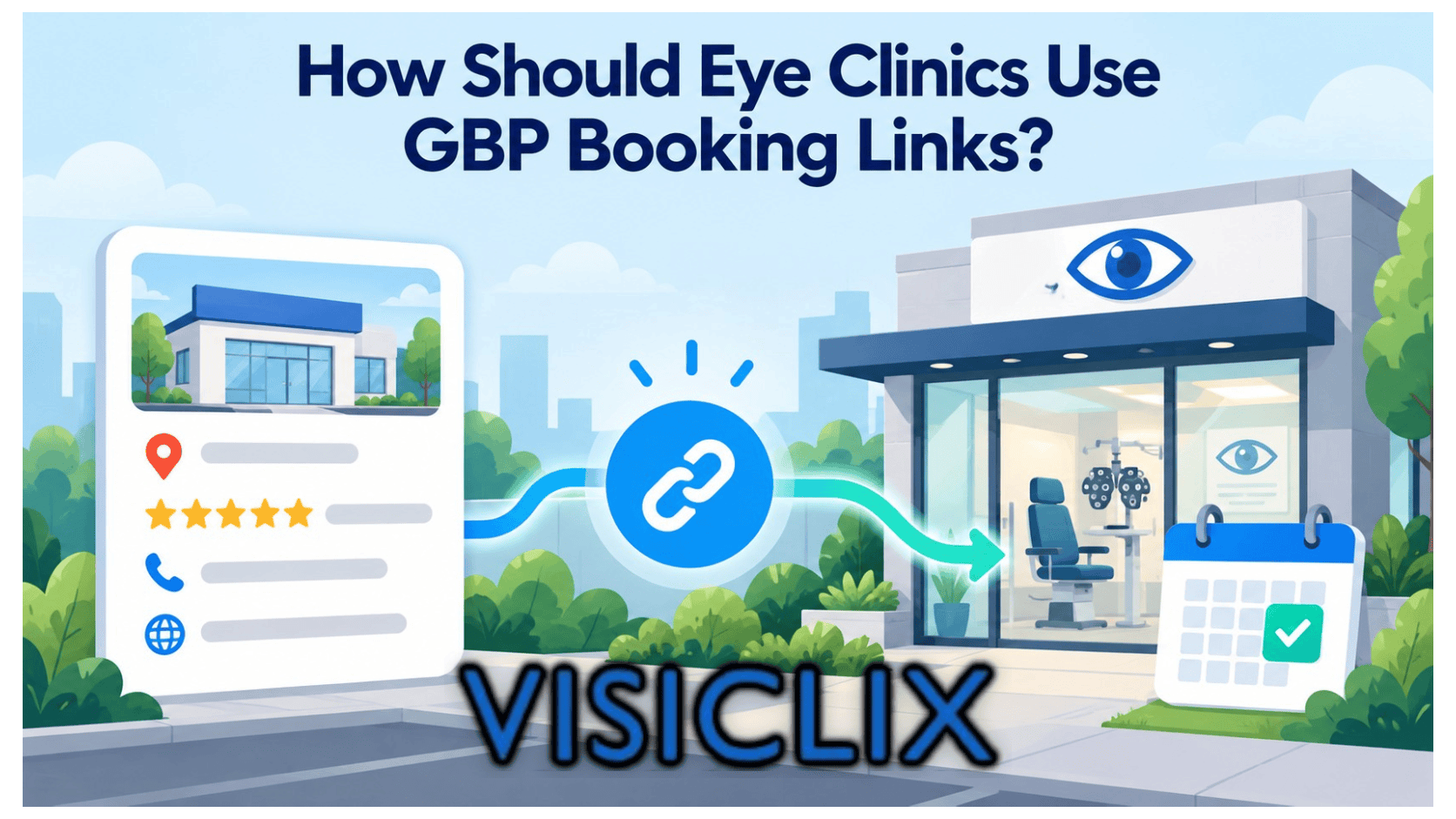

Online appointment scheduling is important for eye clinics because it simplifies how patients book eye exams, reduces administrative work, and creates more opportunities to turn website visitors into scheduled patients. Instead of relying entirely on phone calls, patients can request or secure appointments through a clinic’s website at their convenience.
For practices considering optometrist online scheduling, the benefits extend beyond offering another booking option. A convenient scheduling experience helps patients take action when they’re ready, even outside regular office hours.
However, an appointment button alone doesn’t guarantee results. Eye clinics need a clear booking process, accurate availability, and a website that makes scheduling feel effortless.
What Does Online Appointment Scheduling Look Like at an Eye Clinic?
Online appointment scheduling allows patients to arrange visits through a clinic’s website or connected scheduling platform. Depending on the system, patients can select an appointment type, view available time slots, choose a provider, and receive confirmation.
For eye clinics, this might include comprehensive eye exams, contact lens fittings, routine follow-ups, or other appropriate services. More complex appointments may still require staff assistance to ensure the patient receives the right type of care.
Not every scheduling platform operates the same way. Some confirm appointments instantly using real-time availability, while others collect requests for staff review.
The distinction matters. Patients should always know whether their appointment is confirmed or awaiting approval.
How Does Online Scheduling Turn Search Traffic Into Booked Eye Exams?
Online scheduling helps convert search traffic into appointments by reducing the steps between finding an eye clinic and arranging a visit.
Consider someone searching online for an eye exam near their workplace. They discover a clinic, visit its website, and look for available appointments. If scheduling requires a phone call during business hours, they may postpone the process or explore another practice.
A straightforward online booking option removes that unnecessary delay.
Effective search engine optimization strategies can help eye clinics become more visible when prospective patients search for relevant services. Once visitors arrive, clear navigation, appointment information, and accessible booking options help guide them toward scheduling.
Paid advertising can also introduce clinics to patients actively searching for eye care. However, attracting visitors is only part of the process. A successful digital marketing strategy should connect search visibility with a website experience that encourages meaningful action.
This is especially important for mobile users. Someone searching during a lunch break or after work should be able to understand appointment options without navigating several confusing pages.
The goal isn’t just more website traffic. It’s making it easier for interested patients to become scheduled patients.
Which Scheduling Bottlenecks Can Eye Clinics Reduce Without Losing Personal Service?
Online scheduling can ease routine administrative demands by allowing patients to handle straightforward appointment requests independently.
Front-desk employees often manage incoming calls, patient check-ins, insurance questions, and appointment changes simultaneously. When every scheduling request requires a conversation, staff may struggle to respond quickly during busy periods.
Digital booking provides an additional channel for patients who prefer managing appointments themselves. Automated confirmations, reminders, and convenient rescheduling options can also reduce repetitive communication.
Another advantage is after-hours access. Patients may remember they need an eye exam in the evening, when the clinic is closed. Online scheduling gives them an opportunity to act immediately rather than waiting until the next business day.
Still, personal service remains essential.
Patients experiencing urgent symptoms, requesting specialized care, or needing clarification should have an accessible way to speak with staff. Online scheduling works best when it complements human support rather than replacing it.
Can Online Scheduling Reduce Missed Visits and Empty Appointment Slots?
Online scheduling can help clinics manage missed appointments and unused time slots, particularly when paired with reminders, cancellations, and convenient rescheduling.
Patients sometimes miss appointments because they forget the date, encounter unexpected conflicts, or cannot easily reach the clinic to make changes. Automated reminders provide timely information, while accessible rescheduling options make it easier to notify the practice when plans change.
Some scheduling platforms can also make canceled appointments available to other patients. This helps clinics use existing appointment capacity more effectively.
However, online scheduling doesn’t automatically eliminate no-shows or shorten waiting times.
Results depend on how the system is configured, how consistently patients receive communications, and whether the practice maintains accurate appointment availability. In-office waiting times also depend on staffing, examination length, and patient flow.
For clinic owners, the objective should be better appointment coordination rather than expecting software to solve every scheduling challenge.
What Should Eye Clinics Check Before Choosing an Online Booking Experience?
Choosing an online scheduling experience requires more than comparing software features. Eye clinics should evaluate how well the system supports patient convenience, staff workflows, and existing practice operations.
Several factors deserve attention:
- Mobile-friendly booking: Patients should be able to navigate appointment options comfortably on smartphones.
- Accurate availability: The platform should reflect appropriate appointment times, providers, and service types.
- Scheduling integration: Appointment information should remain consistent with the clinic’s existing workflows.
- Automated communication: Confirmations, reminders, and rescheduling instructions should be clear and reliable.
- Privacy and accessibility: Patient information must be handled appropriately, with alternative booking methods available when needed.
The clinic’s website plays an equally important role. Even a capable scheduling platform can underperform when appointment buttons are difficult to find or pages are confusing.
Thoughtful website design and user experience can make appointment information easier to access while helping visitors understand the next step.
Patient confidence matters, too. Before booking, prospective patients may review clinic ratings, verify business information, or look for signs of a trustworthy practice.
Consistent information and effective online reputation management can support that decision.
Ultimately, the best scheduling experience is one patients can understand quickly and staff can manage reliably.
How Can Eye Clinics Measure Whether Online Scheduling Is Worth the Investment?
Eye clinics can evaluate online scheduling by examining completed bookings, patient access, administrative efficiency, and appointment attendance.
Website traffic alone doesn’t tell the complete story. A practice might attract hundreds of visitors but receive relatively few appointments if its booking process creates unnecessary friction.
Useful performance indicators include booking completion rate, abandoned scheduling attempts, after-hours appointments, cancellations, and the time staff spend handling routine requests.
For example, imagine a clinic website receives 800 relevant visits monthly. At a 2% booking completion rate, it generates 16 appointments. Improving that rate to 3% would generate 24 appointments from the same traffic.
Eight additional bookings without increasing visitor volume. A simple example of how conversion improvements can influence results.
Clinics should also compare these potential gains against software expenses, integration requirements, and ongoing administrative responsibilities.
If a website attracts visitors but produces few bookings, understanding why search traffic isn’t converting can help identify opportunities for improvement.
The most meaningful measure is whether scheduling changes make patient access easier while supporting sustainable practice growth.
What Else Do Eye Clinic Owners Need to Know About Online Scheduling?
Can patients schedule eye exams online outside office hours?
Yes. Online scheduling systems can accept bookings or appointment requests at any time. Whether confirmation happens immediately depends on the platform and the clinic’s scheduling policies.
Does online appointment scheduling replace front-desk staff?
No. Digital scheduling can reduce repetitive booking tasks, but staff remain essential for patient questions, urgent concerns, complex appointments, and personalized assistance.
Is online appointment scheduling suitable for small optometry practices?
Yes. Small practices can benefit from offering convenient booking options, particularly when staff manage multiple responsibilities. The right solution depends on appointment volume, budget, and workflow requirements.
Can patients still call to schedule an appointment?
Absolutely. Maintaining telephone scheduling helps accommodate patients who prefer personal communication or need assistance choosing the appropriate appointment.
A better patient experience often begins with something simple: making it easy to schedule a visit.
Eye clinics don’t need to eliminate personal interactions to improve convenience. They need to remove unnecessary obstacles between patient interest and appointment confirmation.
Try booking an appointment through your own website. If the process feels confusing, slow, or inconvenient, prospective patients may be encountering those same frustrations.
Why Visiclix Is Your Ideal Choice for Search-to-Schedule Marketing?
Visiclix specializes in digital marketing for optometrists and ophthalmologists, helping eye care practices strengthen their online visibility and connect with prospective patients. Its services include search engine optimization, paid advertising, and website development tailored to the eye care industry. By focusing on the complete patient journey, Visiclix helps clinics create clearer connections between online discovery, patient engagement, and appointment opportunities.
Visiclix understands that attracting website visitors is only one part of practice growth. Its eye-care-focused marketing approach emphasizes relevant traffic, user-friendly digital experiences, and measurable business outcomes. With strategies aligned to the needs of independent optometrists and ophthalmologists, Visiclix helps practices make better use of their digital marketing investments.
Ready to Improve Your Patient Booking Journey With Visiclix?
Your next patient may already be searching for an eye clinic. Make it easier for them to discover your practice, understand your services, and take the next step.
Contact Visiclix today to discuss how a more effective digital marketing strategy can help turn patient searches into appointment opportunities.