If your eye clinic runs PPC (or even just relies on Google Business Profile and SEO), most of your highest-intent leads still convert by phone. That’s exactly why call tracking for medical practices matters: it turns “the phone rang” into measurable marketing performance—down to the campaign, keyword theme, landing page, and even the front-desk outcome.
This guide gives you two things most clinics never get in one place:
- a clinic-ready setup you can implement without breaking local SEO, and
- a KPI scoreboard that proves ROI in booked appointments (not just call volume).
What is call tracking for medical practices, and why do eye clinics rely on it so heavily?
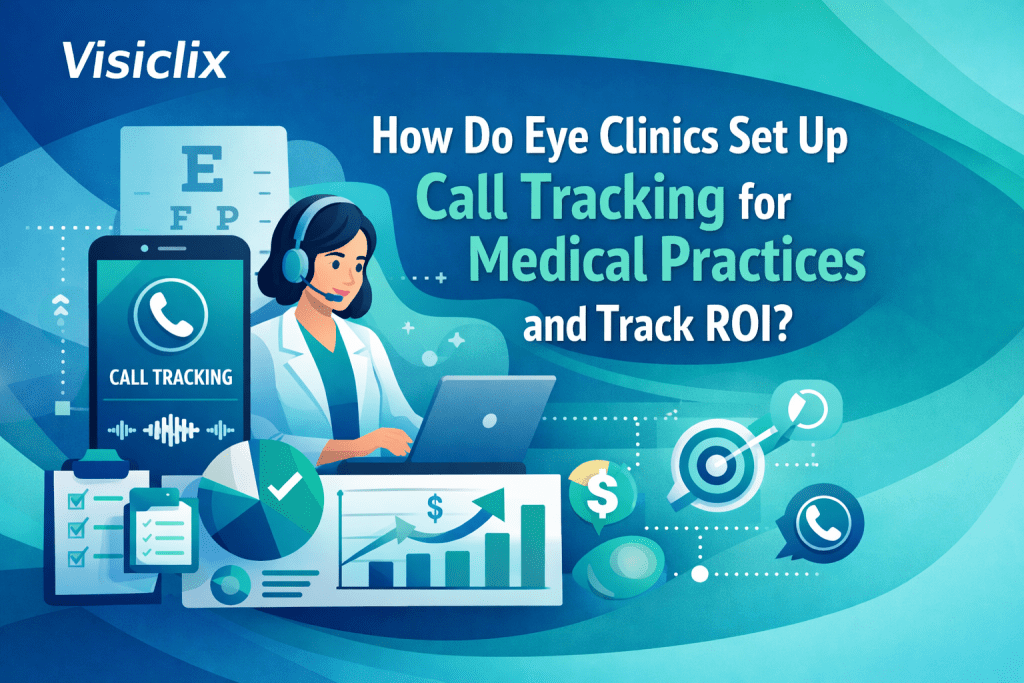
Call tracking for medical practices is the system of assigning trackable phone numbers (and/or tracking methods) to marketing sources so you can attribute inbound calls to the campaign or channel that generated them, then analyze outcomes like qualification and booking.
Eye clinics lean on phone calls more than many other specialties because:
- patients often have time-sensitive symptoms and want reassurance fast,
- insurance and pricing questions are easier live,
- high-value services (LASIK, cataract consults) usually start with a conversation, not a form.
The business impact is simple: if you can’t see which calls are new patients and which of those become booked appointments, you can’t scale spend confidently. Google’s own call conversion tracking exists specifically to help advertisers understand how effectively ads drive valuable calls.
What are the most common concerns about call tracking in healthcare, and how do you address them safely?
Most “call tracking fear” in healthcare is really fear of privacy risk + vendor risk + measurement mistakes. You can address all three with a sane operating model.
Privacy and compliance anxiety (recordings, transcripts, PHI)
If call recordings or transcripts contain PHI, your vendors may be considered business associates depending on what they create/receive/maintain/transmit on your behalf—meaning a Business Associate Agreement (BAA) may be required. HHS explains what makes an entity a business associate and provides sample contract provisions for BAAs.
Practical safeguards most clinics use:
- Record only what you need (quality + training), not everything forever.
- Restrict access by role (front desk manager vs. marketing vs. leadership).
- Set retention limits aligned with your policy and risk tolerance.
- Avoid storing sensitive notes inside ad platforms; keep sensitive details in your clinical systems.
Also note: HHS has warned that “tracking technologies” on regulated entities’ websites can involve identifiable data and may raise HIPAA considerations depending on context.
Accuracy concerns (misattribution, “mystery numbers,” messy reporting)
In practice, call tracking breaks when clinics:
- use too many numbers with no naming conventions,
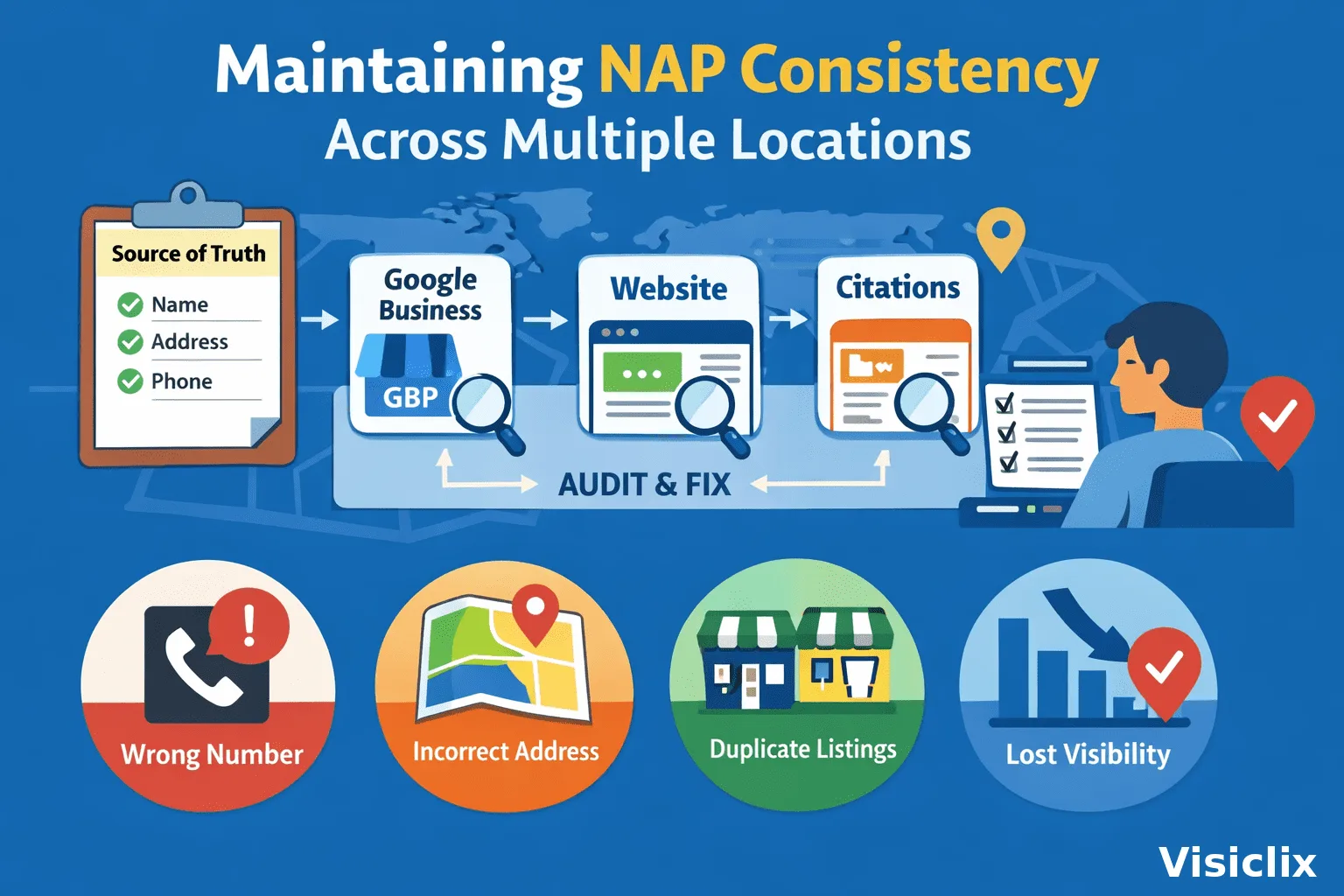
- put tracking numbers into directories (wrecking NAP consistency),
- mix “existing patient calls” with “new patient leads.”
This guide fixes that with a number plan + tagging model + KPI dashboard you can run weekly.
Vendor lock-in and number ownership
If you ever change providers, you don’t want to lose a phone number patients already use. Set a policy upfront around number ownership/portability and where each number is published.
How should an eye clinic choose a call tracking setup without wrecking local SEO?
If you only remember one rule: keep your primary number consistent everywhere you don’t control the page experience.
Use DNI on your website (where you control the code)
Dynamic Number Insertion (DNI) swaps the phone number on your site based on session/source while keeping a consistent underlying identity for search engines when implemented correctly. This is how most modern call tracking tools avoid SEO issues while still attributing calls.
Do not publish tracking numbers as your main NAP across the web
NAP consistency (Name, Address, Phone) is widely treated as a foundation for local SEO. If you scatter multiple “main” phone numbers across directories, you create trust and attribution issues.
A clean number strategy for eye clinics
A practical approach that usually works well:
- One primary number per location used on Google Business Profile and key directories.
- DNI-based numbers for website sessions (to attribute PPC vs. SEO vs. referrals).
- Optional: a small set of campaign-specific numbers for offline (direct mail, radio) or special campaigns.
How do you set up call tracking for medical practices step-by-step for an eye clinic?
Here’s the setup path that avoids the two classic failures: “we tracked calls but learned nothing” and “we tracked calls and broke local SEO.”
Step 1: Define your conversion events (before you buy more numbers)
Separate outcomes by intent so your KPIs don’t lie:
Core revenue conversions
- New patient appointment booked (routine eye exam)
- Procedure consult booked (LASIK/cataract)
- Urgent same-day triage booked (when applicable)
Non-revenue calls you still want to track
- Existing patient reschedules
- Billing/insurance admin
- Wrong number/spam
Your goal is to make sure your reporting highlights new patient demand, not just “total calls.”
Step 2: Build a tracking number map (simple, documented, consistent)
Create a one-page map like:
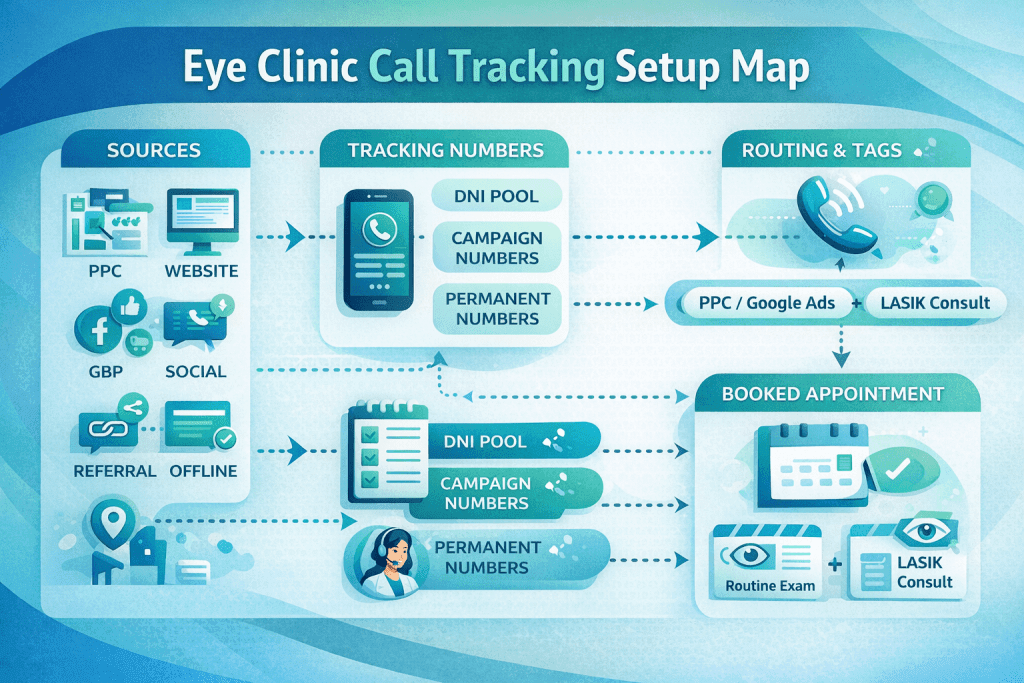
- Location → Channel → Number type → Routing → Tags
Example: “Location A → Google Ads → DNI pool → routes to front desk ring group → tag: PPC / New patient / Service line.”
Keep naming conventions consistent so your reports stay readable months later.
Step 3: Implement DNI on the website (and test it like you don’t trust it)
Checklist:
- DNI swaps numbers on: header, footer, click-to-call buttons, contact page.
- DNI does not alter your Google Business Profile listings or directory citations.
- Test: incognito + mobile + repeat sessions + multiple sources.
Step 4: Configure routing and “whisper” context
Routing should reflect how patients actually book:
- by location,
- by service line (routine vs. LASIK),
- by open hours (after-hours rules matter).
If your system supports it, use “whisper” messages that tell staff where the call came from (e.g., “Google Ads – LASIK consult”). This improves conversion because staff quickly matches intent.
Step 5: Decide how you’ll handle recordings/transcripts
If you use recordings, treat them as operational quality tools, not a surveillance program:
- limit access,
- define retention,
- use them to coach, fix scripts, and reduce missed opportunities.
If recordings/transcripts include PHI, revisit your compliance posture and vendor contracts accordingly (including BAAs when required).
Step 6: Tag calls so your KPIs become actionable
A tagging model eye clinics can actually maintain:
Caller type
- New patient
- Existing patient
- Other (vendor, wrong number)
Service line
- Routine exam / contact lens
- Medical optometry (dry eye, glaucoma monitoring)
- LASIK
- Cataract
Outcome
- Booked
- Not booked (with reason)
- Voicemail / missed
- Spam
This lets you answer the questions PPC owners care about:
- “Which campaigns generate booked consults?”
- “Which campaigns generate time-wasting calls?”
Step 7: Connect results to your marketing stack (so optimization is real)
At minimum:
- Google Ads call conversion tracking for calls from ads (with minimum call duration rules).
- A method to record booked outcomes (CRM, lead log, or scheduling system notes).
- A weekly dashboard (more on that below).
If you want Google Ads bidding to reflect downstream outcomes, offline conversion import and enhanced conversions for leads can help connect “what happened after the click/call” back to the campaign.
Which KPIs matter most for eye clinics using call tracking for medical practices?
Most clinics over-measure volume and under-measure outcomes. Here’s a scoreboard that keeps everyone honest.
Attribution KPIs (marketing truth)
- Calls by channel/campaign (PPC vs SEO vs GBP vs referrals)
- First-time callers (a stronger proxy for new demand than total calls)
- Cost per qualified call (CPQC) = ad spend / qualified calls
- Cost per booked appointment (CPBA) = ad spend / booked appointments
Google notes that call conversion tracking helps you see which keywords/campaigns drive the most valuable phone calls—use that intent, but upgrade it with qualification + booking.
Conversion KPIs (front desk performance)
- Answer rate (by hour/day)
- Average speed to answer
- Abandon rate
- Booking rate (qualified → booked)
- After-hours capture rate (voicemail + call-back success)
These metrics often outperform landing page tweaks because they plug operational leakage. If you miss 20–30% of calls, you can’t “optimize” your way out of it with better ads.
Quality KPIs (what the calls are actually about)
- Qualified call rate (qualified / total)
- Unqualified/spam rate
- Missed opportunity rate (answered but not converted)
Revenue KPIs (proof of ROI)
- Show rate (booked → attended)
- Revenue per appointment / per consult (by service line)
- Marketing ROI using call-attributed appointments as the denominator
Even if you can’t perfectly attribute every patient journey, this framework gives you a directionally accurate “money view” that’s far better than call counts.
What’s a realistic KPI baseline for an eye clinic, and what targets should you improve first?
Use the first 30 days as baseline collection. Don’t overreact in week one—clean the data first (tags, caller type, and outcomes).
Then prioritize fixes in this order:
- Missed calls / slow answer
If you can’t answer, attribution doesn’t matter—your spend is leaking. - Poor qualification
If staff can’t quickly identify the right appointment type, you’ll book lower-value visits or lose higher-value consults. - No closed-loop tracking
If “booked vs not booked” isn’t recorded, PPC optimization will drift toward cheap calls instead of profitable calls.
How do you connect calls to Google Ads performance so you can optimize spend with confidence?
There are three common “call measurement buckets” in Google Ads:
- Calls from ads (call assets/call ads)
- Calls to a number on your website (website call conversions)
- Calls that eventually become booked visits (offline outcomes)
Google explains how it tracks calls from ads as conversions (often using a minimum call duration you set).
For downstream outcomes, offline conversion imports (and enhanced conversions for leads) are designed to connect offline events back to campaigns for better attribution and bidding resilience.
The best practice for eye clinics:
- Track call conversions in Google Ads for immediate optimization signals,
- then upgrade those conversions internally with “qualified” and “booked” outcomes, so you can steer budget toward what becomes revenue.
How can call recordings and conversation insights improve patient experience without turning into “surveillance”?
Use recordings as a coaching loop with a patient-first purpose:
- Reduce hold time frustration.
- Improve clarity around insurance and pricing.
- Standardize how staff handles urgent symptoms.
- Learn which ad promises don’t match reality (and fix the messaging).
If your coaching improves booking rate by even a few points, it often beats any single “ad copy refresh,” because you’re converting more of the demand you already paid to generate.
What mistakes cause call tracking to fail in medical practices—and how do you avoid them?
Mistake 1: Measuring call volume only
Fix: report calls → qualified → booked.
Mistake 2: Mixing new and existing patient calls
Fix: tag caller type. Your marketing should be judged primarily on new patient demand.
Mistake 3: Publishing tracking numbers everywhere
Fix: keep NAP consistent; use DNI on the website instead.
Mistake 4: No one owns the system
Fix: assign an owner for (a) number map integrity, (b) weekly dashboard, (c) staff coaching.
What does a simple weekly call tracking dashboard look like for an eye clinic?
Keep it to 6–10 tiles. If it doesn’t fit on one screen, it won’t get used.
A strong weekly view:
- Total calls (by channel)
- First-time callers
- Answer rate
- Qualified calls
- Booked appointments
- Cost per booked appointment (for PPC)
- After-hours missed calls + call-back success
- Top 3 campaigns by booked appointments
- Top 3 “waste drivers” (spam/unqualified themes)
Add one field called “Actions taken this week” so the dashboard leads to decisions, not just observation.
FAQ
Is call tracking for medical practices HIPAA compliant?
It can be, but it depends on your workflow and data handling. If your setup creates, receives, maintains, or transmits PHI through vendors (including recordings/transcripts), your vendors may be business associates and you may need BAAs and safeguards. HHS provides guidance on business associates and sample BAA provisions.
Will call tracking hurt my local SEO or Google Business Profile rankings?
It doesn’t have to. The safe pattern is to keep your primary NAP consistent across listings and use DNI on your website for attribution. NAP consistency is widely considered foundational for local SEO.
Do I need different tracking numbers for LASIK vs routine exams?
Only if it helps routing and reporting. Many clinics start with channel-based DNI and add service-line routing later. The key is that your tags capture service line and outcome.
What’s the difference between a qualified call and a booked appointment?
A qualified call matches your target patient intent (new patient, right geography, right service). A booked appointment is the operational outcome. You want campaigns that maximize booked, not just qualified.
How long should I wait before judging PPC performance with call tracking data?
Collect a clean baseline for about 30 days (or enough volume to smooth day-to-day volatility), then optimize weekly—especially around staffing coverage and booking rate.
How do I track calls from referrals or offline materials?
Use dedicated offline numbers for flyers/mailers/radio and tag them as offline sources. Keep your main NAP consistent; don’t replace your primary listing number with offline tracking numbers.
Conclusion
For an eye clinic, phone calls aren’t just a lead type—they’re the conversion path. The point of call tracking for medical practices isn’t to collect more data; it’s to create a measurement system that ties marketing spend to booked appointments and revenue, while exposing operational leakage (missed calls, slow answers, weak booking).
Start with a clean number strategy (NAP-safe + DNI), tag calls by caller type and outcome, then run a weekly KPI dashboard that forces action. When your clinic can see “which campaigns book consults,” scaling PPC becomes a confident decision instead of a gamble.
Why Visiclix is Your Ideal Choice for Call Tracking for Medical Practices?
Visiclix approaches measurement the way eye clinics need it: not as “more tracking,” but as an appointment pipeline you can manage. That means building your tracking map to preserve local SEO, creating a practical tagging system your front desk will actually use, and reporting outcomes in a way that makes PPC optimizations obvious—down to service line and location.
More importantly, Visiclix treats conversion as a shared responsibility between marketing and operations. When your ads improve but your answer rate or booking rate slips, the system catches it immediately—so you don’t waste budget “fixing” the wrong thing. The result is a clinic that can scale growth while staying grounded in real KPIs: qualified calls, booked appointments, and ROI.
Get a Call Tracking KPI Scorecard from Visiclix
Want a fast, practical way to validate your setup? Visiclix can provide a Call Tracking KPI Scorecard tailored to your eye clinic—covering number strategy, DNI health checks, tagging structure, and the weekly dashboard that ties calls to booked appointments.
If you’re ready to turn call volume into ROI clarity, Visiclix will help you implement a measurement system your team can run every week—without breaking local SEO or burying staff in complexity.