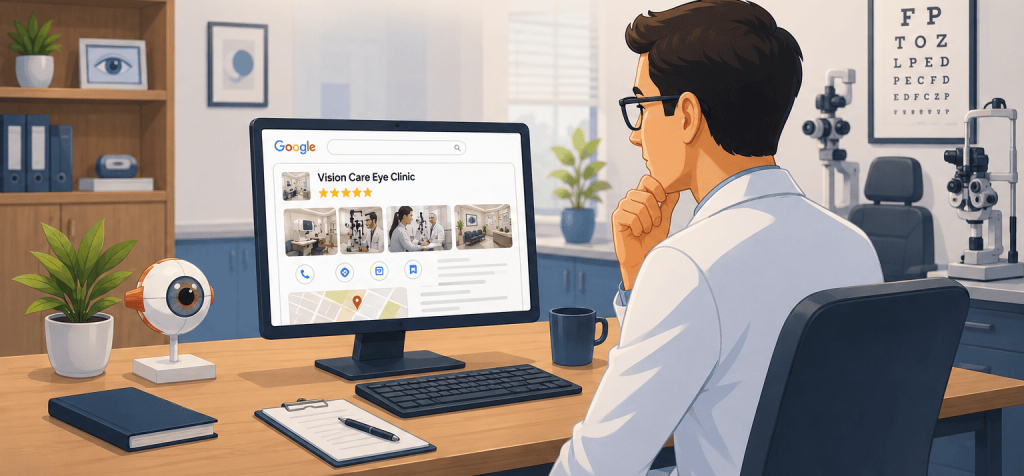
Google Business Profile photos for eye clinics help prospective patients verify that a practice is real, professional, accessible, and prepared to care for them. Images of the entrance, staff, exam rooms, diagnostic equipment, and optical area answer practical questions before someone calls or schedules an appointment.
Consider two practices with similar ratings. One profile shows recent photos of a welcoming team, clearly marked entrance, modern equipment, and comfortable reception area. The other has a logo and two outdated images. For an uncertain first-time patient, that visual difference can become the deciding factor. Google also recommends adding business photos to make a profile more complete, attractive, and informative.
Which Clinic Photos Remove the Most Uncertainty for First-Time Patients?
A parent is searching for a clinic for their child’s first eye exam. The ratings look positive, but they still have questions: Is the office easy to find? Does it feel welcoming? Is the clinic equipped to work with children?
The most useful photos answer questions like these. An eye clinic’s profile should generally show:
- The building exterior, entrance, signage, and parking
- Reception and waiting areas
- Optometrists, ophthalmologists, technicians, and front-desk staff
- Exam and pretesting rooms
- Diagnostic technology
- Pediatric spaces or accessibility features
- Contact lens fitting areas
- Optical displays and frame selections
Every image should have a job. An exterior photo helps patients recognize the clinic when they arrive, while a team photo makes the people behind the practice feel more familiar. Google specifically notes that exterior images can help customers recognize a business during their visit.
How Should an Eye Clinic Photograph the Patient Journey?
Imagine a first-time patient who is already anxious about dilation, unfamiliar tests, and navigating a large medical complex. Random equipment photos may not reassure them. A visual walkthrough can.
Photograph the experience in the order a patient is likely to encounter it: arriving at the building, finding the entrance, checking in, waiting, meeting the care team, completing pretesting, entering the exam room, and visiting the optical area. Directional signs, accessible entrances, retinal imaging equipment, OCT technology, and frame displays can all make the visit feel more predictable.
The objective is not to document every detail. It is to make an unfamiliar environment easier to understand. Small visual cues—where to park, which door to use, what the front desk looks like—can remove friction that clinical credentials alone do not address.
What Makes a GBP Image Feel Authentic Rather Than Overproduced?
One practice uploads a glossy stock photo of models wearing white coats. Another shows its actual optometrist speaking with a technician in the real clinic. The second image may be less polished, but it provides something more valuable: evidence.

Authentic photos use recognizable staff, current branding, natural expressions, accurate surroundings, and realistic lighting. Professional photography is still worthwhile. It simply should not make the clinic look dramatically different from what patients will see when they arrive.
Avoid heavy filters, unrealistic editing, unexplained equipment close-ups, and generic healthcare scenes. Google recommends focused, well-lit images without significant alterations or excessive filtering because photos should represent reality. Recommended specifications include JPG or PNG files between 10 KB and 5 MB, with a preferred resolution of 720 by 720 pixels.
Professional. Not artificial.
How Can Photos Reinforce Reviews, Services, and the Clinic Website?
A patient reads a review praising the clinic’s friendly technicians and advanced retinal imaging. Directly below it, recent photos show those technicians and the imaging equipment. The written and visual trust signals support each other.
This is where photos become more persuasive. Team images reinforce comments about compassionate care. Equipment photos support service descriptions. Accessibility images confirm practical information. Optical-gallery photos help patients understand the eyewear experience.
The same visual identity should continue after the patient clicks through to the website. Consistent staff photos, colors, interiors, and messaging create a connected experience rather than making the profile and website feel like separate businesses. Visiclix supports that consistency through reputation and review management, website design and hosting, and SEO for eye doctors.
When Should an Eye Clinic Refresh Its Photo Library?
Suppose a practice renovated its optical area six months ago, hired a new doctor, and replaced its exterior signage. Yet Google still shows old furniture, former employees, and an entrance patients no longer use.
Review the profile whenever something meaningfully changes. Common triggers include renovations, new staff members, updated technology, rebranding, expanded frame inventory, new accessibility features, seasonal displays, or changes to parking and entrances.
A monthly visual review is usually enough to catch obvious gaps. Upload new images when they provide useful information—not simply to meet an arbitrary posting quota. Google notes that newer uploaded media appears first within the profile’s photo area, although selecting a cover image does not guarantee that it will be the first image users see.
Which Photo Mistakes Quietly Undermine Credibility?
A clinic may provide excellent care and still appear neglected online. Blurry nighttime images, outdated signage, empty rooms, and patient-uploaded photos can create a first impression the practice never intended.
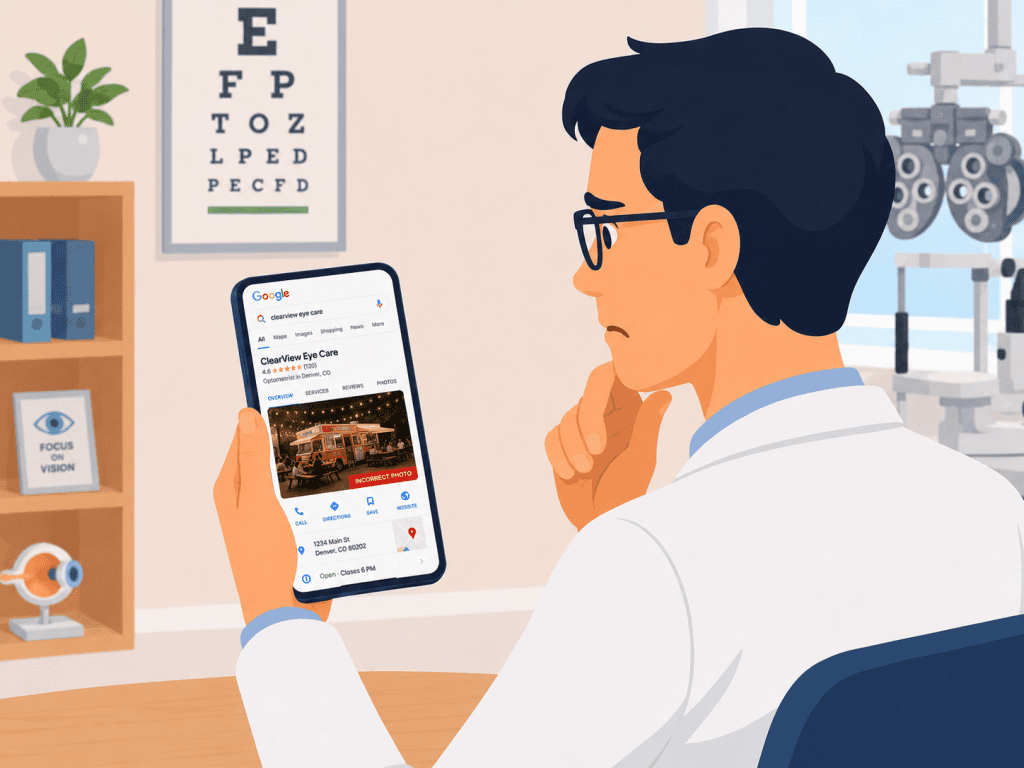
Common credibility problems include dark or tilted photos, former staff members, cluttered counters, generic stock images, repeated equipment shots, promotional graphics in place of real clinic images, and old branding. Visible records, computer screens, patient names, appointment sheets, or prescription information create a more serious concern.
Covered healthcare providers should establish a clear authorization process before using identifiable patient images for marketing. The U.S. Department of Health and Human Services explains that, with limited exceptions, written authorization is required before protected health information is used or disclosed for marketing. Clinics should also check backgrounds carefully and involve their privacy officer or legal adviser when developing a photo policy.
How Can a Practice Measure Whether Its New Photos Are Helping?
A practice uploads a new photo library and notices more profile activity. Did the images contribute to more appointments, or did traffic increase for another reason?
Photo performance should be evaluated alongside business outcomes. Compare calls, website clicks, direction requests, search visibility, form submissions, and appointment inquiries before and after a major visual update. Ask new patients how they found the clinic and whether anything on the profile influenced their decision.
Google Business Profile performance reporting can show profile views, search terms, direction requests, call-button clicks, website clicks, and supported booking activity. It will not prove that one particular photo generated an appointment, but it can reveal whether stronger profile presentation corresponds with more meaningful interactions.
This measurement should connect with the wider acquisition strategy. Organic local visibility and Google PPC advertising for eye-care practices often reach patients at different stages of the same search journey. A recognizable, credible clinic presence helps those channels support one another.
FAQ
How many photos should an eye clinic add to its Google Business Profile?
Google does not publish an ideal or required number. Focus first on complete coverage of the building, staff, patient environment, equipment, accessibility, and relevant services. Add new images when they offer information that is current and genuinely useful.
What size should GBP photos be?
Google recommends JPG or PNG files between 10 KB and 5 MB. The preferred resolution is 720 by 720 pixels, while the minimum is 250 by 250 pixels. Images should be focused, well lit, and minimally altered.
Should eye clinics use stock photos?
Stock photos may support occasional educational content, but they are weak primary trust assets. They cannot show the actual team, entrance, equipment, or patient environment. Real images provide more relevant evidence.
Can patients appear in clinic photos?
Identifiable patients should appear only after the practice has followed the appropriate authorization and privacy procedures. Check the entire image for names, screens, records, reflections, and people in the background—not only the main subject.
Do photos directly improve local rankings?
Google does not identify photo quantity as an independent ranking factor. It explains that local results are mainly determined by relevance, distance, and prominence. Photos still help create a more complete and informative profile, which can make the practice more convincing once patients find it.
What Should Your Next Photo Update Accomplish?
The next image should answer a real patient question. Show where to enter. Introduce the team. Explain the environment. Make the technology less intimidating.
Open the profile as though you have never visited the clinic. What remains invisible, confusing, or outdated? That gap should guide the next photo—not a generic content calendar.
Why Visiclix Is Your Ideal Choice for Google Business Profile Photos for Eye Clinics?
Visiclix specializes in eye-care marketing for optometrists, ophthalmologists, and practices that need to attract more local patients. That industry focus matters because eye-care patients evaluate a distinctive combination of clinical expertise, technology, accessibility, eyewear options, and personal comfort. Visiclix helps practices present those strengths clearly rather than relying on generic healthcare marketing.
A strong photo library also works best when it supports the rest of the patient journey. Visiclix can connect profile visuals with local visibility, reviews, website conversion, SEO, and paid search instead of managing each element in isolation. With performance tracking and eye-care-specific strategy, the focus remains on meaningful actions: calls, inquiries, and appointment opportunities.
Make Your Eye Clinic More Convincing in Local Search With Visiclix
Your profile may already be attracting attention. The question is whether it gives patients enough confidence to take the next step.
Contact Visiclix for a marketing consultation and review how your photos, reviews, website, SEO, and advertising work together to turn local searches into patient inquiries.