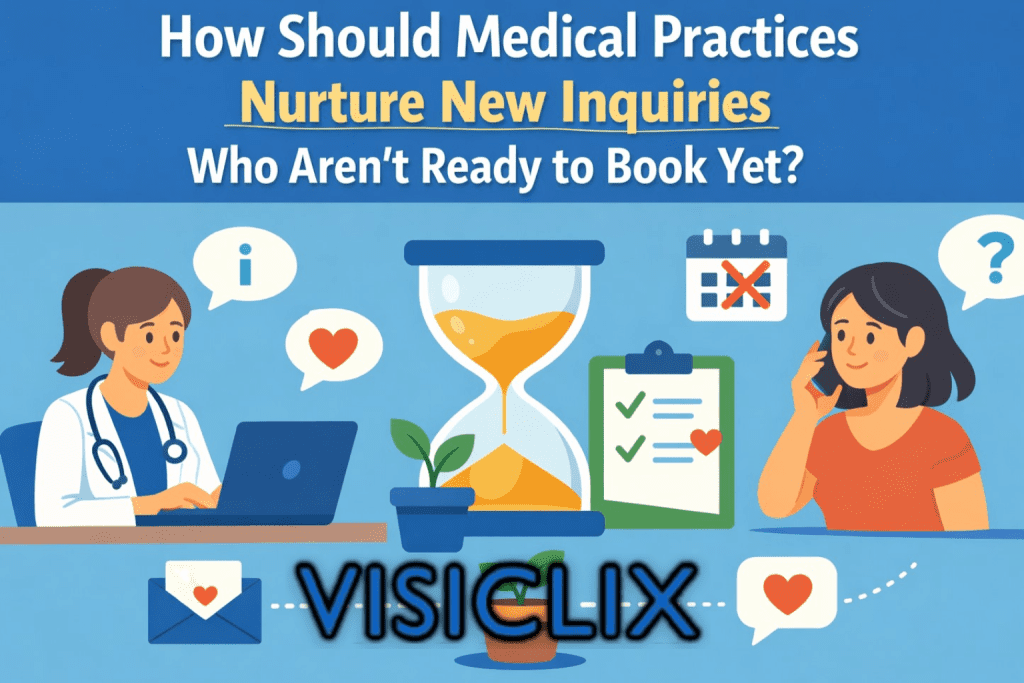
Not every inquiry is ready to schedule on the first call, form fill, or ad click. In healthcare, hesitation is normal. People often need time to compare providers, understand cost, check insurance, talk with family, or feel emotionally ready before committing. That is why lead nurturing for medical practices matters: it helps your practice stay helpful, visible, and trustworthy until the patient is ready to act.
For medical practices, the goal is not to pressure undecided inquiries into immediate appointments. The goal is to reduce uncertainty, answer questions clearly, respect privacy preferences, and make the next step feel easy. When that happens, more inquiries convert over time, and more of your marketing spend turns into booked care instead of lost opportunity.
What is lead nurturing for medical practices?
Lead nurturing for medical practices is the process of following up with new inquiries in a structured, helpful way after they first express interest but before they book. In practice, that usually means a mix of fast first response, relevant follow-up, educational content, reminders, and human outreach tailored to the person’s service interest and readiness level. Google notes that lead forms are designed to capture interest directly from ads, but capturing interest is only the start; practices still need a system that turns that interest into qualified appointments.
In healthcare, nurturing is different from generic sales follow-up. It has to be more trust-centered, more privacy-aware, and more patient-friendly. HHS and CMS both emphasize patient privacy rights and secure communication practices, while AHRQ and CDC stress the importance of clear, understandable communication that supports trust and better engagement.
Why do some new inquiries hesitate before booking?
Many healthcare inquiries do not book immediately because the decision is rarely just logistical. A patient may be asking, “Can I afford this?”, “Does this provider take my insurance?”, “Is this the right treatment?”, or “Do I even need to do this now?” In emotionally charged specialties, hesitation can also come from fear, embarrassment, uncertainty, or a desire to avoid making the wrong choice. Patient-centered communication research from the National Cancer Institute shows that trust, emotional needs, and information needs all influence care decisions and engagement.
Health literacy is another major factor. CDC says health literacy practices help build trust and affect a person’s willingness to engage in care, while AHRQ’s toolkit focuses on making health information easier to understand and act on for patients of all literacy levels. When a practice answers too quickly but not clearly, the inquiry may still go cold because the person does not feel confident enough to move forward.
How does lead nurturing help medical practices convert more inquiries over time?
Lead nurturing works because it matches how people actually make healthcare decisions. Some patients act fast, but many need multiple helpful touches before they feel ready. A well-run nurture process keeps your practice top of mind, reduces confusion, and gives the patient more reasons to trust you later even if they do not convert today. That is especially important for practices investing in Google Ads, SEO, local search, and referral traffic, where the first conversion is often only an inquiry, not an appointment.
It also protects the value of your lead response window. InsideSales reports that conversion rates are dramatically higher when businesses respond in the first five minutes, and Google’s lead-generation guidance similarly emphasizes reaching people at pivotal moments and optimizing for the right leads. In a medical setting, that does not mean aggressive selling; it means acknowledging the inquiry quickly, then following up with useful next steps rather than letting interest fade.
What should medical practices say to new inquiries who are interested but not ready yet?
Medical practices should say three things well: “We heard you,” “We can help,” and “You do not have to decide this second.” That combination lowers pressure while keeping momentum. The most effective messages are clear, brief, empathetic, and action-oriented. CDC and AHRQ both support communication approaches that improve understanding and trust, which is exactly what undecided inquiries need.
A good first message sounds like this: Thanks for reaching out to our office. We’d be happy to answer questions about treatment, insurance, timing, or next steps. If you’re not ready to schedule yet, we can still help you understand your options. That kind of wording works because it removes friction. It acknowledges that hesitation is normal and positions the practice as a guide, not a closer. That is usually far more effective in healthcare than “Do you want to book now?” repeated three different ways.
How soon should a medical practice follow up with a new inquiry?
The first follow-up should happen as quickly as operationally possible. Speed matters because interest decays quickly, and delayed response makes even a warm inquiry feel ignored. InsideSales’ lead response research found a major conversion advantage in the first five minutes, which supports building fast acknowledgment systems even when a full human conversation cannot happen immediately.
For medical practices, the practical version is this: send an immediate acknowledgment, then attempt meaningful human follow-up the same day whenever possible. The acknowledgment can confirm receipt and explain what happens next. The human follow-up can answer questions, verify service fit, and invite scheduling. Fast does not mean rushed; it means the patient should never wonder whether their request disappeared into a void.
How often should medical practices follow up without sounding pushy?
Most practices do better with a paced cadence than with either one-and-done outreach or daily chasing. A practical rhythm is immediate acknowledgment, a same-day or next-business-day contact attempt, another touch within a few days, and then a slower educational sequence over the following weeks. The exact pace should depend on urgency, specialty, and the patient’s preferred communication method. AHRQ specifically highlights that communication preferences, such as phone, email, or text, shape how patients interact with the healthcare system.
What keeps follow-up from feeling pushy is not just spacing. It is relevance. If every message says “Are you ready to book?” the sequence becomes annoying quickly. If the touches instead answer common questions, clarify insurance or financing, explain what to expect, and invite low-pressure conversation, the practice stays useful. That is the difference between persistence and pressure.
Which lead nurturing channels work best for medical practices?
The best channel mix usually includes phone, email, and text, with each channel doing a different job. Phone is strong for complex questions and high-intent inquiries. Email is useful for educational follow-up, FAQs, provider information, and financing or insurance explanations. Text works well for short, timely nudges, reminders, and simple next steps when used in a privacy-conscious way. AHRQ notes that patient communication preferences should be captured and used, and HIPAA rules require providers to accommodate reasonable requests for confidential communications by alternative means or locations.
HHS also permits certain appointment and refill reminder communications and allows email communication with patients in many circumstances, especially when the patient initiates email or accepts that mode of contact. But practices still need to apply privacy safeguards, honor communication preferences, and avoid unnecessary disclosures. In other words, channel strategy in healthcare is not only about response rates; it is also about compliance and patient comfort.
How should medical practices segment inquiries for better lead nurturing?
Medical practices should segment inquiries by at least four things: service line, readiness, source, and barrier. Service line matters because a dermatology inquiry needs different information than a bariatric, dental, med spa, orthopedic, or behavioral health inquiry. Readiness matters because someone asking about next available appointments is different from someone who only downloaded a guide. Source matters because a branded search lead, referral lead, and paid social lead often arrive with different intent levels. Barrier matters because “cost,” “insurance,” “not ready,” and “need more information” all call for different follow-up.
Segmentation also improves personalization, and personalization matters. Salesforce research reports that more than half of customers expect offers to be personalized and that most expect consistent interactions across departments. For a medical practice, that means the front desk, intake team, CRM, and marketing workflows should not treat every inquiry the same or force patients to repeat themselves across channels.
What content helps nurture medical inquiries who are still deciding?
The most effective nurture content reduces uncertainty. That usually includes provider bios, insurance and payment information, what-to-expect pages, procedure overviews, patient testimonials, location details, FAQs, and short educational emails that answer one real question at a time. CDC and AHRQ both emphasize communication practices that improve understanding and trust, which makes educational content a conversion tool as much as an information tool.
Content should be written for decision support, not just search traffic. For example, a patient considering treatment may not need another broad blog post. They may need a plain-language explanation of recovery time, whether financing is available, whether consultation fees apply, or what happens at the first appointment. That kind of content shortens the path from curiosity to confidence.
How can automation improve lead nurturing for medical practices?
Automation improves lead nurturing when it handles speed, consistency, and timing without making communication feel robotic. It is ideal for instant acknowledgment, routing, reminder sequences, reactivation workflows, and triggered education based on form responses or service interest. HubSpot’s lead nurturing guidance centers on creating seamless automated campaigns tailored to each lead’s path, and Google emphasizes sending better signals so lead-generation systems optimize for the right outcomes.
But automation should not replace human judgment in situations that need reassurance or nuance. Insurance questions, anxiety-driven hesitations, and treatment objections are often better handled by a trained staff member than by a canned sequence alone. The strongest systems use automation to ensure no inquiry is forgotten, then add human follow-up where trust has the biggest impact.
What does an effective lead nurturing workflow look like for a medical practice?
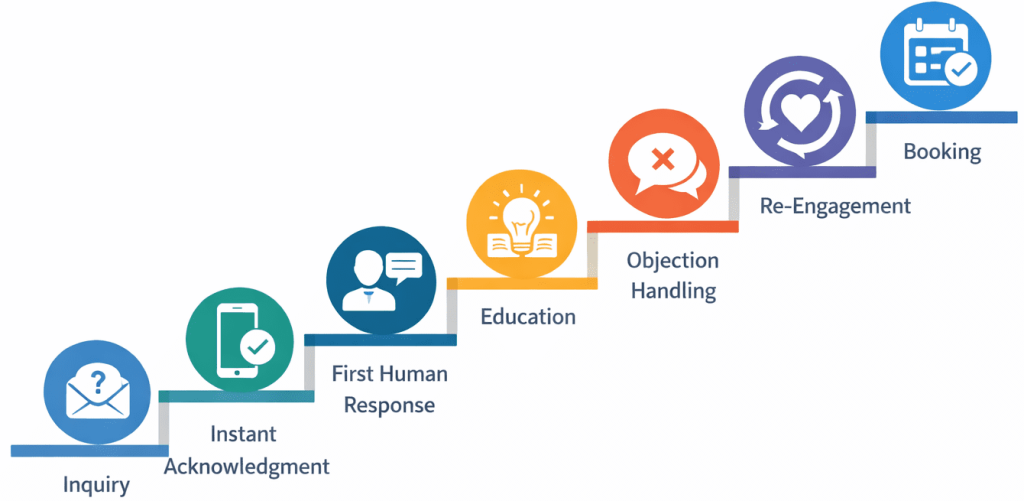
A practical workflow starts with immediate acknowledgment. After that, the practice should attempt same-day human follow-up, tag the inquiry by service and readiness, and move the person into an appropriate sequence if they do not book. That sequence might include a short educational email, an FAQ or financing message, a text check-in, and a later re-engagement touch if there is no response. Google’s lead-form and lead-quality guidance supports qualifying leads and improving signals, while InsideSales’ research reinforces why the first response window matters so much.
A simple example looks like this:
Day 0: instant confirmation plus same-day outreach.
Day 1 to 3: answer questions and provide one useful resource.
Day 4 to 10: follow up based on barrier, such as insurance, timing, or treatment questions.
Week 2 onward: lighter-touch education and reactivation.
At every point, the messaging should reflect patient preference, privacy safeguards, and a clear next step.
How should medical practices handle common objections during lead nurturing?
When the objection is cost, the practice should not dodge it. It should explain consultation fees, financing options, insurance verification steps, and what affects pricing. When the objection is timing, it should offer a low-friction next step such as a callback later, a future availability check, or a planning resource. When the objection is uncertainty, it should offer educational content or a conversation with the right staff member. That approach aligns with patient-centered communication principles that focus on information needs, emotional needs, and trust.
Practices should also distinguish between true objections and unresolved confusion. Many “I’m not ready” responses really mean “I do not understand enough yet” or “I am worried about making a mistake.” Nurture messaging should uncover that gently. A response such as “Would it help if we explained what the first visit looks like or checked your insurance options?” moves the conversation forward without pressure.
What mistakes should medical practices avoid in lead nurturing?
The biggest mistake is slow response. After that, the most common problems are generic messaging, poor segmentation, inconsistent handoff between marketing and front desk, and no follow-up plan beyond the first call. These issues make practices spend money to generate interest without building any system to convert that interest over time. That hurts both patient experience and marketing efficiency.
Another common mistake is treating compliance as an afterthought. HHS guidance makes clear that privacy rights, confidential communication requests, and minimum necessary standards matter. A practice can lose trust fast if messages contain too much detail, go to the wrong place, or ignore a patient’s stated preferences. Nurturing should feel organized and respectful, not intrusive.
How can medical practices measure whether lead nurturing is working?
Medical practices should track response time, contact rate, inquiry-to-appointment conversion rate, time-to-book, reactivation rate, no-show rate, and channel-level engagement. Google recommends focusing on lead quality signals, and HubSpot’s email reporting guidance highlights the value of reviewing engagement metrics like opens, clicks, bounces, and unsubscribes to improve future performance. Together, those metrics show whether the nurture system is attracting the right leads, keeping them engaged, and helping staff convert them.
The most useful way to read the data is by segment. If one service line converts well from email but another needs phone follow-up, your process should reflect that. If PPC leads respond quickly but delay booking, your KPI should not stop at form submissions. It should measure how many of those inquiries eventually book after structured follow-up. That is where real ROI appears.
Can lead nurturing help medical practices get more value from PPC and other paid traffic?
Yes. Paid traffic often produces many inquiries who are interested but not ready at the exact moment they convert. Google Ads can capture intent through search, video, maps, display, and lead forms, but Google also stresses that lead-generation systems perform best when advertisers feed them stronger quality signals and optimize for the leads that actually matter. A nurture system is part of that quality loop because it helps practices learn which inquiries become real appointments and which messages improve conversion later.
For Visiclix’s audience, this is the business case: the practice already paid to generate the inquiry. If that inquiry is ignored, under-followed, or handled with generic scripting, acquisition cost rises and campaign efficiency falls. But if the practice has a structured nurture process, more “not yet” leads turn into booked patients later, which improves the return on SEO, paid search, paid social, and local marketing together. That is one of the clearest ways to make lead generation more profitable without needing to buy more traffic immediately.
FAQ
What is lead nurturing in healthcare marketing?
Lead nurturing in healthcare marketing is the process of guiding prospective patients after they first inquire but before they schedule. It usually includes fast response, educational follow-up, reminders, and personalized outreach based on readiness, service interest, and communication preference.
How long should a medical practice nurture a lead before stopping?
There is no universal timeline, because urgency and decision cycles vary by specialty. A practical approach is to follow up actively in the first days, continue lighter education and reminders over the following weeks, and then use occasional reactivation for leads that were qualified but delayed. The right duration should be driven by service type, engagement, and patient preference.
Is email or SMS better for lead nurturing for medical practices?
Neither is always better. Email is stronger for detailed education and FAQs, while SMS is stronger for short, timely nudges and reminders. The best choice depends on the patient’s stated preference, the type of information being shared, and the privacy safeguards the practice has in place.
Can small medical practices use lead nurturing without a large team?
Yes. Small practices can start with a simple system: immediate acknowledgment, one or two follow-up workflows, basic segmentation, and a small library of decision-support content. Automation can handle consistency while staff focus on the conversations that need a human touch.
What should a front desk team do when a patient inquiry does not book right away?
The front desk should document the reason, confirm the preferred contact method, send or queue the right follow-up resource, and schedule an appropriate next touch rather than marking the inquiry as lost. That keeps the inquiry in motion and prevents missed opportunities caused by weak handoff.
Does lead nurturing help increase ROI from Google Ads and other PPC campaigns?
Yes. When practices respond quickly, segment properly, and track which inquiries later become appointments, they get more value from the traffic they already paid for. Google’s lead-generation best practices explicitly focus on improving lead quality and optimizing for the signals tied to real business outcomes.
Conclusion
Many new inquiries are not lost. They are simply undecided. That distinction matters. A medical practice that treats hesitation as disinterest will waste leads, ad spend, and growth opportunities. A practice that treats hesitation as a decision stage can build trust, answer objections, and convert more patients over time.
That is why lead nurturing for medical practices should be built into the patient acquisition process, not added as an afterthought. Fast acknowledgment, clear communication, respectful follow-up, thoughtful segmentation, and privacy-aware automation together create the kind of experience that helps more inquiries become appointments when the patient is ready.
Why Visiclix is Your Ideal Choice for Lead Nurturing for Medical Practices?
Visiclix understands that generating inquiries is only one part of growth. Medical practices also need a reliable way to convert the people who are interested today but not ready to schedule yet. That means building a system that connects paid traffic, website forms, intake workflows, communication preferences, and follow-up content into one process that feels seamless to the patient and measurable to the practice.
A strong nurture strategy is especially important when marketing budgets are tied to ROI. Visiclix helps practices close the gap between lead generation and booked appointments by improving speed to lead, segmentation, messaging, and conversion tracking. Instead of letting undecided inquiries disappear after the first touch, Visiclix helps practices build a patient acquisition engine that keeps working after the click.
Ready to Turn More Medical Inquiries Into Appointments With Visiclix?
If your practice is generating leads but too many of them are stalling before they book, Visiclix can help you build a smarter nurture strategy. From faster response systems to better follow-up messaging and PPC-to-appointment optimization, Visiclix helps medical practices turn more inquiries into revenue-producing appointments.