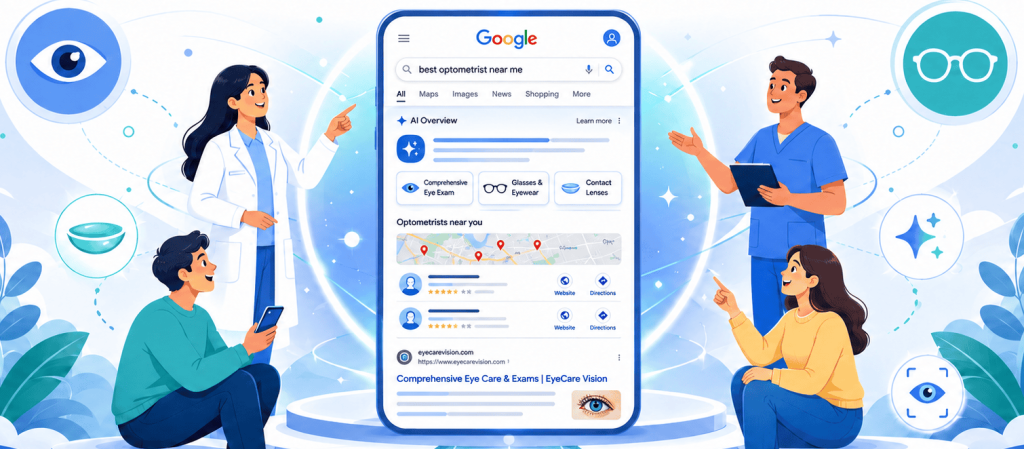
Optometrists can show up in Google AI Overviews by creating clear, trustworthy, locally relevant content that directly answers patient questions, supports those answers with strong on-page evidence, and keeps technical SEO clean enough for Google to crawl, index, and understand. AI Overviews SEO for optometrists is not about chasing a new trick. It is about making your practice’s website the most useful, specific, and reliable answer when patients search things like “Do I need an eye exam for headaches?”, “best contact lenses for dry eyes,” or “eye doctor near me that accepts my insurance.”
Google says its generative AI features are rooted in its core Search ranking and quality systems, which means traditional SEO still matters for AI visibility. Pages need to be indexed, eligible to show snippets, crawlable, helpful, and structured around real user needs. For optometry practices, that means combining medical trust, local search clarity, service-specific content, and conversion-focused design into one search-ready experience.
What Does Google Need Before an Optometry Page Can Appear in AI Overviews?
Google needs to be able to access, understand, and trust your content before it has any chance of appearing in generative AI search results. According to Google’s guidance, pages must be indexed and eligible to appear in Search with a snippet before they can be shown in generative AI features. Crawlability, technical structure, and strong page experience are still foundational.
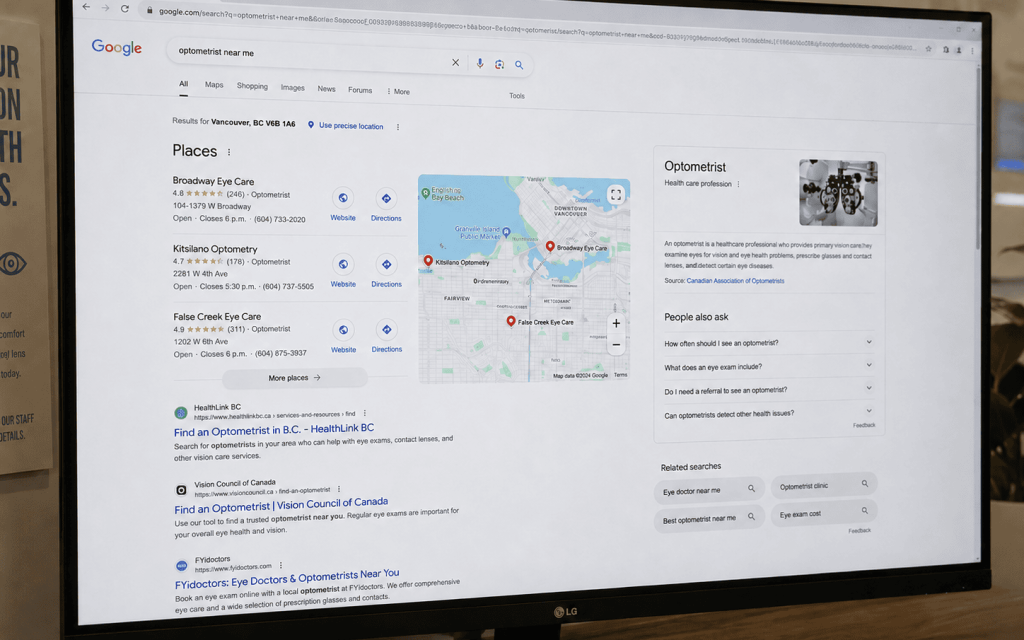
For an optometry website, this starts with clean SEO basics. Each service page should have one clear purpose, such as comprehensive eye exams, pediatric eye care, dry eye treatment, contact lens fittings, myopia management, or emergency eye care. Avoid thin pages that only list a service and ask visitors to call. Instead, explain who the service is for, common symptoms, what happens during the appointment, when patients should schedule care, accepted insurance details when applicable, and what makes your practice qualified to help.
This is where strong search engine optimization for eye doctors becomes important. A well-optimized optometry website should not only rank for broad keywords. It should help Google connect your pages to specific patient concerns, local search intent, and service-related questions.
How Should Optometrists Structure Content Around Patient Questions?
Optometrists should structure content around the exact questions patients ask before booking an appointment. AI Overviews often respond to question-style searches, so pages that answer natural patient questions clearly can be more useful to Google’s AI systems. A strong optometry content strategy should include question-based headings, direct answers near the top of each section, and helpful explanations that go beyond a short definition.
For example, a dry eye page should not only say, “We treat dry eye.” It should answer questions like: What causes dry eyes? When should I see an optometrist for dry eye? Can contacts make dry eyes worse? What treatments are available? How long does dry eye treatment take? These questions mirror how patients search when they are still deciding whether they need care.
A useful structure is simple: answer the question first, explain the reason behind the answer, give examples, and then guide the patient toward the next step. This format helps both readers and search systems understand the page quickly. It also supports stronger engagement because patients do not have to dig for the information they came to find.
How Can Optometrists Build More Trust for Health-Related Searches?
Optometrists can build trust by showing experience, expertise, authoritativeness, and trustworthiness throughout their website. Google’s helpful content guidance points to E-E-A-T as an important way its quality systems evaluate whether content seems reliable and useful, especially for topics where accuracy matters. Eye care content often overlaps with health decisions, so generic or AI-written pages without expert review can feel weak.
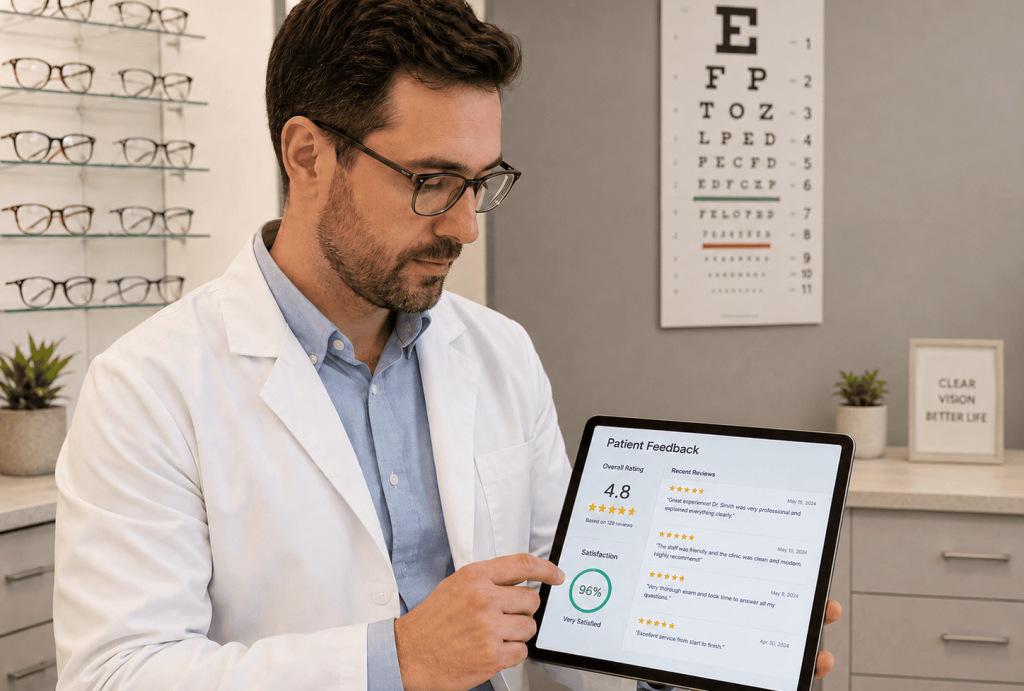
Your website should clearly show who provides care, what credentials they hold, what services they specialize in, and how patients can verify the practice’s legitimacy. Doctor bio pages, staff profiles, clinic photos, patient education content, review signals, and transparent contact information all help support trust. If your practice publishes blog posts about symptoms or conditions, have them reviewed by an optometrist and include a clear reviewer note.
Reviews also matter because patients use them to judge credibility before booking. A strong reputation management strategy helps your practice maintain consistent review generation, respond professionally, and keep business information accurate across online listings. That matters for patients, and it also supports local search confidence.
How Do Local SEO Signals Help Optometrists Appear in Patient Searches?
Local SEO signals help Google understand where your practice is located, what services you offer, and whether you are a relevant option for nearby patients. Google’s Business Profile guidelines emphasize accurate business representation, precise address or service-area information, and choosing the fewest categories needed to describe the business. For optometrists, your Google Business Profile should match your website, directory listings, and real-world practice information.
Keep your practice name, address, phone number, hours, appointment links, services, and photos updated. If you have multiple locations, each location should have its own page with unique local details. A strong local page can include nearby landmarks, parking information, accepted insurance, doctors at that location, services offered, and direct appointment options.
AI Overviews may pull from multiple local and organic sources, so consistency matters. If your website says one thing, your Google Business Profile says another, and directories show outdated phone numbers, you weaken trust. Visiclix’s digital marketing services for eye care can support this broader visibility by connecting SEO, local presence, reputation, and paid search into one coordinated strategy.
How Do Schema, Website Design, and Technical SEO Support AI Overview Visibility?
Schema, website design, and technical SEO help Google interpret your practice more accurately. Google’s structured data documentation explains that LocalBusiness structured data can communicate details such as business hours, departments, and other business information in a standardized format. Structured data is not a shortcut to rankings, but it helps search engines understand important entities on your site.
For optometrists, useful schema may include LocalBusiness, MedicalBusiness or MedicalOrganization where appropriate, physician details, services, FAQs, reviews when compliant, and location information. The visible page content and schema should match. Do not add markup for services, reviews, or claims that users cannot actually see on the page.
Website design also affects performance. If patients land on your page from an AI Overview or organic result, they should immediately understand what you offer and how to book. Mobile-friendly design, fast loading, clear calls to action, tap-to-call buttons, and accessible navigation all support patient conversion. Visiclix’s website design and hosting services focus on building websites for eye care practices that are professional, mobile-friendly, and built to convert visitors into patients.
How Can Optometrists Measure AI Overviews SEO Performance?
Optometrists can measure AI Overviews SEO performance by tracking visibility, indexed pages, organic clicks, local actions, calls, appointment requests, and changes in patient-search rankings. In June 2026, Google announced Search Generative AI performance reports in Search Console for a subset of websites, designed to show impressions, pages, countries, devices, and dates for visibility in generative AI features such as AI Overviews and AI Mode.
Until those reports are broadly available to every site, practices should monitor Search Console queries, Google Business Profile actions, local rankings, call tracking, form submissions, and appointment booking sources. Track pages that answer high-intent questions and compare their impressions, clicks, and conversions over time.
Pair SEO data with paid search data when possible. If a service page is getting organic visibility but not enough appointments, Google PPC ads for optometrists can help capture high-intent patient searches while SEO builds momentum. This gives your practice both short-term lead flow and long-term search visibility.
FAQ
Can optometrists guarantee placement in Google AI Overviews?
No. Google does not guarantee that any page will appear in AI Overviews, even if it follows best practices. The goal is to improve eligibility, usefulness, and trust so your pages have a stronger chance of being selected when Google needs a reliable source.
Is AI Overviews SEO different from traditional SEO?
It is different in presentation but not completely different in foundation. Google says generative AI features rely on its core Search ranking and quality systems, so crawlability, helpful content, technical SEO, and authority still matter.
What types of optometry content are best for AI Overviews?
Question-based service pages, symptom guides, insurance explainers, local practice pages, and clinically reviewed FAQs are strong options. These formats match how patients search and give Google clear answers to summarize.
Should optometrists use AI to write website content?
AI can help with drafts, outlines, and research organization, but health-related content should be reviewed for accuracy by qualified professionals. Google warns that large-scale AI content without added value may violate spam policies, so human expertise is essential.
Put Your Practice Where Patient Searches Are Headed
Showing up in Google AI Overviews starts with becoming the clearest and most trustworthy answer for the searches your patients already make. Build pages around real questions, strengthen local signals, keep your website technically clean, and make every important service easy for Google and patients to understand.
AI search is changing how patients discover care, but the core goal remains the same: be helpful, be credible, and make the next step simple. When your website answers patient concerns clearly and supports those answers with strong local and professional trust signals, your practice is better positioned for both AI visibility and appointment growth.
Why Visiclix is Your Ideal Choice for AI Overviews SEO for Optometrists?
Visiclix specializes in digital marketing for optometrists, ophthalmologists, and eye care practices, which means its strategies are built around the way patients actually search for vision care. Instead of using generic SEO tactics, Visiclix focuses on eye care services, local patient intent, reputation signals, high-converting websites, and measurable growth. That industry focus matters when your goal is to appear in search experiences where accuracy, trust, and local relevance are essential.
Visiclix also brings SEO, web design, reputation management, and paid search together under one strategy. That matters because AI Overviews SEO is not just a content task. Your technical website health, service-page structure, reviews, Google visibility, and conversion path all work together to influence whether patient searches turn into booked appointments. With Visiclix, your online presence is built to attract patients and support long-term growth.
Grow Your AI Search Visibility with Visiclix
Ready to make your practice easier to find in Google’s evolving search results? Start with a clear review of your website, local visibility, and patient-search opportunities. Visit Visiclix or contact the Visiclix team to build a smarter SEO strategy for the way patients search today.