Myopia-control treatment is designed to slow how quickly a child’s nearsightedness worsens. It cannot reverse myopia, shorten an eye that has already grown too long, or guarantee that your child’s prescription will stop changing.
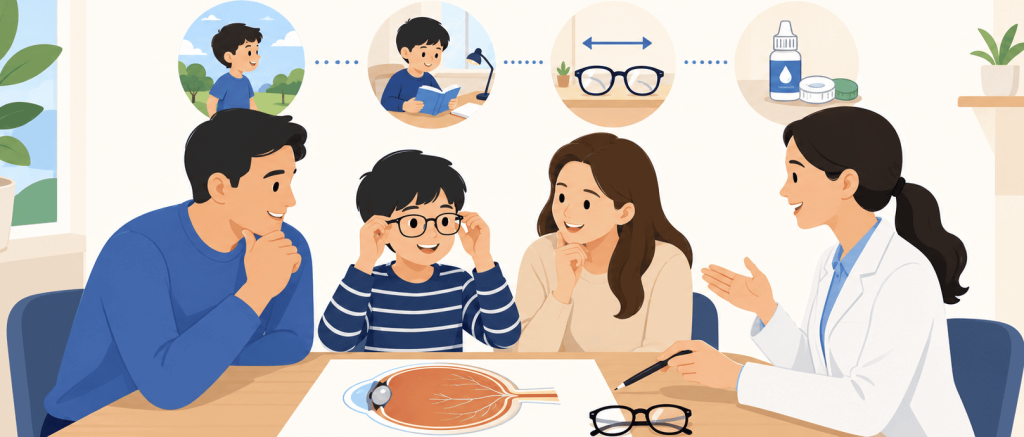
Before treatment begins, parents should understand the goal, available options, daily responsibilities, possible side effects, and follow-up schedule. Specialized glasses, daytime contact lenses, overnight orthokeratology lenses, and atropine eye drops may all be discussed, depending on the child. Good myopia control patient education helps families choose a plan they understand and can realistically follow.
Before treatment, remember:
- The goal is to slow progression, not cure myopia.
- No single treatment is right for every child.
- Results vary, even with consistent use.
- Regular follow-up is part of the treatment—not an optional extra.
Why Does Slowing Childhood Myopia Matter?
Slowing childhood myopia may help a child reach adulthood with a lower prescription than they might have developed without treatment. That matters for both everyday vision and long-term eye health.
Ordinary single-vision glasses make distant objects clearer, but they generally do not address the excessive eye growth associated with progressing myopia. As the eye becomes longer, the prescription may increase and the tissues at the back of the eye can become more vulnerable. Higher levels of myopia are associated with greater lifetime risks of retinal detachment, myopic macular degeneration, glaucoma, and cataracts.
The message should not be frightening. Myopia control is a proactive step intended to reduce progression—not a promise to remove every future eye-health risk.
How Will the Eye Doctor Decide Whether a Child Is a Candidate?
An eye doctor determines candidacy through a comprehensive examination and an assessment of the child’s progression risk, eye health, lifestyle, and ability to manage treatment.
The evaluation may include the child’s current prescription, previous prescription changes, age when myopia began, family history, corneal health, visual habits, and time spent outdoors. Some practices also measure axial length, which is the front-to-back length of the eye.
Practical details matter too. Can the child safely insert and remove contact lenses? Will they wear specialized glasses consistently? Can the family maintain an eye-drop routine? The International Myopia Institute recommends selecting treatment through an individualized process that includes risk assessment, informed consent, family communication, and ongoing monitoring.
What Myopia-Control Treatments May Be Discussed?
The main treatment categories are specialized eyeglasses, daytime soft contact lenses, overnight orthokeratology lenses, and atropine eye drops. Availability, regulatory status, cost, and suitable age ranges vary, so a recommendation should be specific to the child.
How Do Specialized Myopia-Control Glasses Work?
These glasses correct distance vision while using specially designed optical zones or lenslets intended to influence how light reaches the retina and slow excessive eye growth.
In September 2025, the FDA authorized the first spectacle lenses marketed in the United States for slowing pediatric myopia progression. The authorized lenses are intended for eligible children who begin treatment between ages 6 and 12. Some users in the supporting study reported visual symptoms such as blur or halos, so comfort and adaptation should be monitored.
How Do Daytime Myopia-Control Contact Lenses Work?
These soft lenses use dual-focus or multiple-focus zones to correct distance vision while creating an optical signal intended to slow progression.
MiSight 1 Day was the first contact lens approved by the FDA for slowing myopia progression in eligible children who start treatment between ages 8 and 12. It is a single-use daily lens and should not be worn overnight. Careful handwashing, correct insertion and removal, and following the prescribed wearing schedule are essential.
What Is Orthokeratology?
Orthokeratology, often called ortho-k, uses specially fitted rigid contact lenses worn while sleeping. The lenses temporarily reshape the cornea, allowing many children to see clearly during the day without glasses while also helping slow myopia progression.
Because the lenses are worn overnight, cleaning, disinfection, case care, and follow-up are especially important. Overnight contact-lens wear carries a risk of serious eye infection, so families must know which symptoms require immediate attention.
How Are Atropine Eye Drops Used?
Low-concentration atropine drops are typically applied at night. They may slow progression but do not correct blurry distance vision, so the child will usually still need glasses or contact lenses.
Results cannot be generalized across every concentration or population. A U.S. National Eye Institute-funded trial found that 0.01% atropine was no better than placebo over two years in the children studied, while other research has evaluated different concentrations and populations. Parents should ask which concentration is recommended, what evidence supports it, and whether the use is FDA-approved or off-label.
What Benefits and Limitations Should Parents Expect?
Treatment can meaningfully slow progression, but no option can guarantee that a child’s prescription will remain unchanged.
A child may continue becoming more nearsighted—just more slowly than expected without treatment. Results depend on factors such as age, baseline prescription, rate of progression, treatment type, consistency, and individual response. The first option may also need to be adjusted if it causes discomfort, does not fit the family’s routine, or is not providing the expected control.
Before starting, ask the eye doctor how success will be measured. A clear plan might track prescription changes, axial growth, eye health, comfort, wearing time, and adherence over defined follow-up intervals.
What Safety Questions Should Parents Ask?
Parents should ask about common side effects, hygiene requirements, warning signs, approved uses, and what to do when treatment is missed.
Useful questions include:
- Which symptoms require an urgent call?
- Can my child swim, nap, or sleep in these lenses?
- How should lenses, cases, or drop bottles be handled?
- Will backup glasses be needed?
- Is this treatment being used within its FDA-labeled indication?
- What should we do if the eye becomes red, painful, light-sensitive, or unusually watery?
An off-label recommendation does not automatically mean a treatment is inappropriate. It does mean the clinician should explain the evidence, expected benefits, uncertainties, alternatives, and potential risks so the parent can give informed consent.
What Happens During Treatment and Follow-Up Visits?
Follow-up visits allow the eye doctor to evaluate vision, eye health, comfort, treatment use, and whether progression is slowing.
An early visit may focus on lens fit, handling, visual quality, or eye-drop side effects. Later visits may include prescription testing, corneal evaluation, axial-length measurement when available, and a discussion of missed doses or wearing time.
Keep these appointments even when your child says they can see clearly. Clear vision does not reveal whether the eye is continuing to grow or whether the treatment is being used safely.
How Can Parents Help Treatment Work as Intended?
Parents can support treatment by creating a consistent routine, reinforcing proper hygiene, attending appointments, and involving the child in age-appropriate decisions.
Connect treatment to something that already happens every day—after brushing teeth, before school, or at bedtime. Keep backup glasses available, replace supplies as instructed, and report discomfort rather than encouraging the child to “push through it.”
Outdoor activity and regular breaks from prolonged close work may also support a broader myopia-management plan. Still, lifestyle changes should not be treated as substitutes for a prescribed intervention.
FAQ
Can Myopia Control Reverse a Child’s Nearsightedness?
No. Treatment is intended to slow future progression. It does not permanently shorten an elongated eye or erase the prescription already present.
At What Age Should Myopia Control Begin?
There is no single starting age for every child or treatment. Earlier-onset myopia can carry more time for progression, so a timely assessment is important. Specific products also have different evidence bases and approved age ranges.
Will a Child Still Need Glasses During Treatment?
It depends on the treatment. Specialized glasses and daytime soft contact lenses provide vision correction as part of their design. Children using atropine usually need separate glasses or contact lenses, while successful ortho-k wear may provide clear daytime vision without them.
How Long Does Treatment Last?
Treatment often continues while the eyes are growing and myopia remains likely to progress. The decision to reduce or stop treatment should be based on documented stability, age, previous progression, and the clinician’s judgment—not simply because the prescription did not change at one visit.
What Happens if the First Treatment Does Not Work Well Enough?
The eye doctor may review adherence, adjust the wearing schedule, change the treatment, or discuss a carefully selected combination approach. A slower-than-expected response does not necessarily mean the entire plan has failed.
What Is the Best Next Step for Your Child?
Schedule a comprehensive myopia-management consultation and bring your child’s current glasses, previous prescriptions, medication information, and a written list of questions.
A well-explained plan should leave both you and your child understanding the goal, daily routine, potential risks, follow-up schedule, and method for measuring progress. No guesswork. No unexplained promises.
Treatment decisions should always be made with a qualified eye-care professional who has examined your child and can recommend care based on their individual needs.
Why Visiclix Is Your Ideal Choice for Myopia Control Patient Education Marketing
Clear educational content helps optometry and ophthalmology practices answer important questions before families enter the examination room. Visiclix supports eye-care practices with specialized search engine optimization, responsive website design, and content strategies created for the ophthalmic industry. The goal is not simply to publish more pages. It is to make trustworthy information easier to find, understand, and act on.
Visiclix can connect educational resources with targeted Google PPC advertising, ongoing eye-care news and content, and conversion-focused patient journeys. Its eye-care marketing team understands that sensitive health topics require clarity, credibility, and responsible messaging. That combination helps practices educate families, strengthen trust, and turn relevant online searches into meaningful patient conversations.
Help More Families Find Your Practice With Visiclix
Your practice already has the clinical expertise. Make sure parents can find it when they begin searching for answers.
Request a free marketing review from Visiclix to explore a patient-education, SEO, website, and PPC strategy built specifically for eye-care growth.