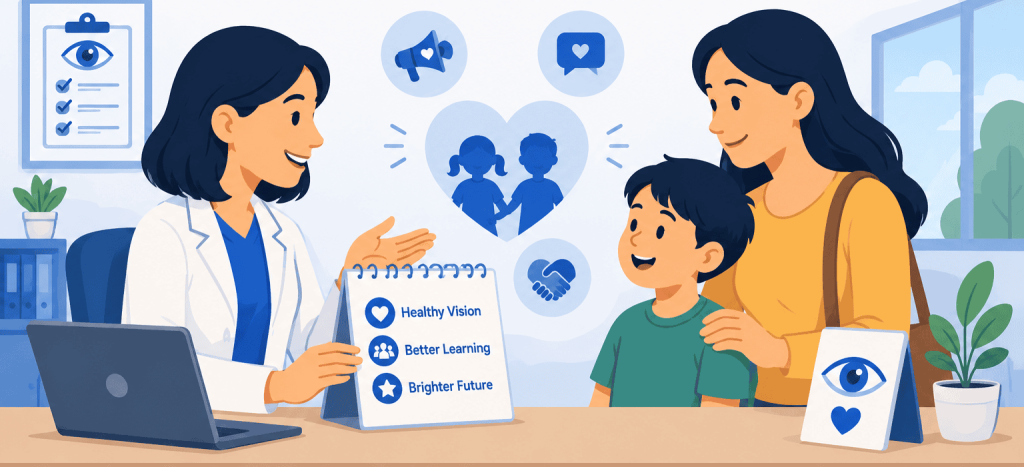
Eye care practices can market children’s vision screenings without sounding salesy by educating parents first, explaining the service clearly, and offering a simple next step without fear or artificial urgency. Effective children vision screening marketing does not pressure families into booking. It helps them understand what a screening can identify, what it cannot diagnose, and when additional care may be appropriate.
The goal is not to create anxiety. Quite the opposite. Your messaging should make parents feel informed, supported, and confident enough to decide what is right for their child.
What Is a Children’s Vision Screening, and Why Does the Distinction Matter in Marketing?
A children’s vision screening is a brief assessment used to identify children who may need additional eye care. It is not the same as a comprehensive eye examination.
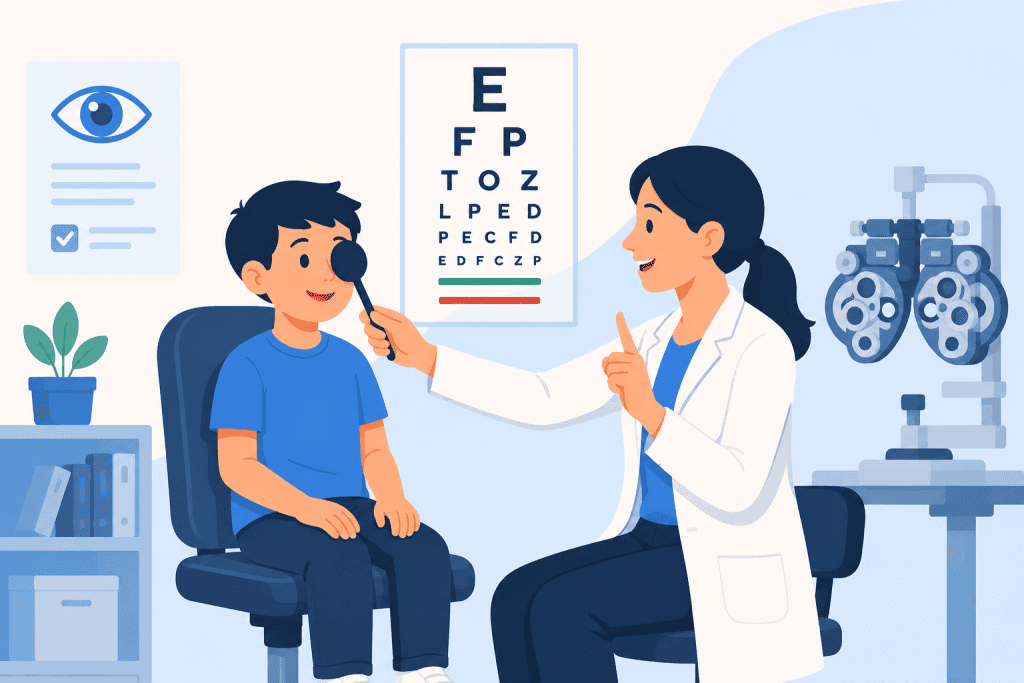
The CDC explains that screenings may be performed by pediatricians, family doctors, school nurses, or other qualified professionals. When a possible concern is detected, the child may be referred to an eye doctor for a more complete examination. The American Academy of Ophthalmology makes the same distinction: screening helps flag potential problems, while a comprehensive exam evaluates them more thoroughly.
That difference should be clear in every ad, social post, email, and landing page. Avoid suggesting that a screening can diagnose every eye condition or guarantee that a child has no vision problems.
Use language such as “identify possible vision concerns” or “determine whether further evaluation may be helpful.” Accurate wording sounds more trustworthy—and far less like a sales pitch.
How Can You Turn Clinical Information Into Parent-Friendly Messaging?
Turn clinical information into parent-friendly messaging by answering the questions parents are already asking. Skip the jargon. Start with a recognizable concern, explain the screening in plain language, and provide one useful next step.
Step 1: Start With a Real Parent Question
Parents may wonder whether their child’s vision is affecting reading, classroom participation, sports, or everyday comfort. Your message can acknowledge those concerns without implying that every difficulty is caused by an eye condition.
Try questions such as:
- “Has your child had a recent vision screening?”
- “Do you know what happens during a children’s vision screening?”
- “Could your child benefit from an updated vision check?”
Simple. Familiar. Not alarming.
Step 2: Explain What the Screening Does
Follow the question with a clear explanation:
“A vision screening is a brief check that may identify signs your child could benefit from additional eye care.”
This gives parents useful information without overselling the service.
Step 3: Offer a Low-Pressure Next Step
Instead of repeating “Book now,” use calls to action that match the parent’s readiness:
- Learn what the screening includes.
- Ask our team whether a screening is appropriate.
- View available screening times.
- Find out what happens after the screening.
The message still supports appointments, but education comes first.
Where Should You Promote Children’s Vision Screenings?
Promote screenings wherever parents research health services, look for local providers, and seek trusted recommendations. A strong campaign usually combines your website, search visibility, paid advertising, social media, and community outreach.
Build a Dedicated Website Page
Create a focused page that answers practical questions:
- What happens during the screening?
- How long does it usually take?
- Which age groups does the practice serve?
- How should parents prepare their child?
- What happens if the screening suggests a concern?
- What are the payment or insurance options?
A clear, mobile-friendly eye care website makes it easier for busy parents to understand the service and take action. The page should have a visible phone number, simple navigation, and an appointment option that works smoothly on a smartphone.
Strengthen Organic and Local Search Visibility
Educational pages can attract parents searching for answers before they are ready to schedule. A coordinated approach to SEO for optometrists can connect screening pages with related questions about children’s eye care, referrals, and comprehensive examinations.
Your local presence matters, too. Accurate practice information and thoughtful reputation management and local visibility help parents confirm that your office is established, accessible, and trusted by other families.
Run Focused Search Campaigns
Search ads can reach parents who are actively researching local screenings or pediatric eye care. Keep each ad closely aligned with the landing page. Google advises advertisers to make ads accurate and relevant while ensuring the landing page provides useful information that matches what the user expected after clicking.
With properly structured Google Ads for eye care practices, the message might read:
“Children’s Vision Screenings Available
Learn what the screening includes and find a convenient appointment time.”
No scare tactics. No dramatic promises.
Educate Through Social Media
Use social media marketing for eye care practices to answer common questions, introduce pediatric-friendly team members, and show parents what to expect when they arrive.
A short video tour of the screening area can be more reassuring than a promotional graphic. Other useful topics include preparing a nervous child, understanding screening results, and knowing when a comprehensive examination may be recommended.
Build Community Referral Relationships
Schools, pediatricians, parent groups, and youth organizations can help practices distribute reliable vision information. Industry guidance also recommends building relationships with schools and pediatricians while making professional credentials and family testimonials visible.
Give partners useful referral instructions—not just branded brochures. Explain who the service is for, how parents can contact the practice, and what happens after a concerning screening result.
What Should Your Ads, Posts, and Landing Pages Actually Say?
Effective screening copy should combine a familiar concern, a helpful explanation, a trust signal, and one simple action.
Use this structure:
Parent concern → Clear explanation → Reassurance → Next step
For example:
Too salesy:
“Don’t risk your child’s future. Book a vision screening before it’s too late!”
More helpful:
“Some childhood vision concerns are not easy to notice at home. A vision screening may identify whether your child could benefit from additional eye care. Learn what the process involves.”
Here is another option for social media:
“Not sure what a children’s vision screening includes? Our team explains each step and helps parents understand when further evaluation may be recommended.”
Your landing page should continue the same message. Do not use a calm educational ad and then send parents to a page filled with countdown timers, aggressive pop-ups, or repeated warnings.
Consistency builds confidence.
How Do You Make the Booking Experience Feel Helpful Rather Than Pushy?
Make booking feel helpful by giving parents enough information to decide before asking for their contact details.
Place important information near the appointment form, including the screening’s purpose, expected duration, location, preparation instructions, and payment details when available. Add staff photos, relevant credentials, and genuine reviews from families—provided appropriate consent and privacy practices are followed.
Your main CTA can be direct without being forceful:
- Find a convenient screening time.
- Request more information.
- Speak with our team.
- Schedule a children’s vision screening.
Also offer a phone option. Some parents may want to ask whether the screening is suitable before making an appointment. That conversation is part of the patient experience, not an obstacle to conversion.
How Can You Measure Whether the Campaign Is Working?
Measure both completed appointments and the actions that show parents are engaging with your information.
Useful campaign metrics include:
- Screening appointment conversion rate.
- Cost per booked appointment.
- Calls and appointment-form submissions.
- Landing-page conversion rate.
- Search terms that generate qualified inquiries.
- Referral source.
- Cancellation and no-show rates.
- Follow-up appointments after screening referrals.
Google’s website conversion tools are designed to measure actions people take after interacting with an ad, helping advertisers understand campaign performance and optimize around meaningful outcomes.
Do not judge the campaign primarily by impressions, likes, or pageviews. Those numbers can indicate reach, but they do not tell you whether families found the information useful or scheduled care.
Frequently Asked Questions
Is a vision screening the same as a comprehensive eye examination?
No. A screening is a shorter assessment intended to identify possible concerns or determine whether additional evaluation may be needed. A comprehensive eye examination is more detailed and is performed by an eye care professional.
How often should children receive vision screenings?
Recommendations depend on the child’s age, risk factors, previous results, and the guidance used by their healthcare providers. AAPOS recommends age-appropriate screening throughout childhood and repeat screening every one to two years after age five. Parents should follow the schedule recommended by their pediatrician or eye care professional.
Can an eye care practice promote free or community screenings?
Yes, but the promotion should clearly explain what is included, who is eligible, whether appointments are required, and what happens after the screening. Avoid using “free” as the entire message. The educational and follow-up details matter more.
What makes a pediatric eye care advertisement feel trustworthy?
Clear explanations, realistic claims, professional credentials, transparent appointment information, and a calm tone all strengthen trust. The ad should help parents understand the service rather than frighten them into responding.
Should screening ads be directed at children or their parents?
The primary message should usually address parents or caregivers because they research services and make appointment decisions. Visuals can still be warm and child-friendly, but the information should answer adult questions about safety, convenience, cost, and next steps.
Why Visiclix Is Your Ideal Choice for Pediatric Eye Care Marketing?
Visiclix specializes in digital marketing for optometrists, ophthalmologists, and eye care practices. That industry focus supports more relevant audience targeting, clearer patient education, and campaigns built around the way families search for eye care. For practices developing children vision screening marketing, specialized knowledge also helps keep the message clinically responsible and commercially effective.
Visiclix brings website design, SEO, local visibility, Google Ads, social media, and reporting into one coordinated strategy. Instead of promoting screenings through disconnected campaigns, the team can align your ads, educational content, landing pages, and appointment experience around one clear message. More trust for parents. Better-quality opportunities for your practice.
Help More Families Find the Right Eye Care With Visiclix
Parents do not need more pressure. They need clear information from an eye care practice they can trust.
Request a free marketing consultation with Visiclix to identify opportunities in your pediatric service pages, search campaigns, local presence, and parent-focused messaging. Build a campaign that supports families—and turns genuine interest into appointments.