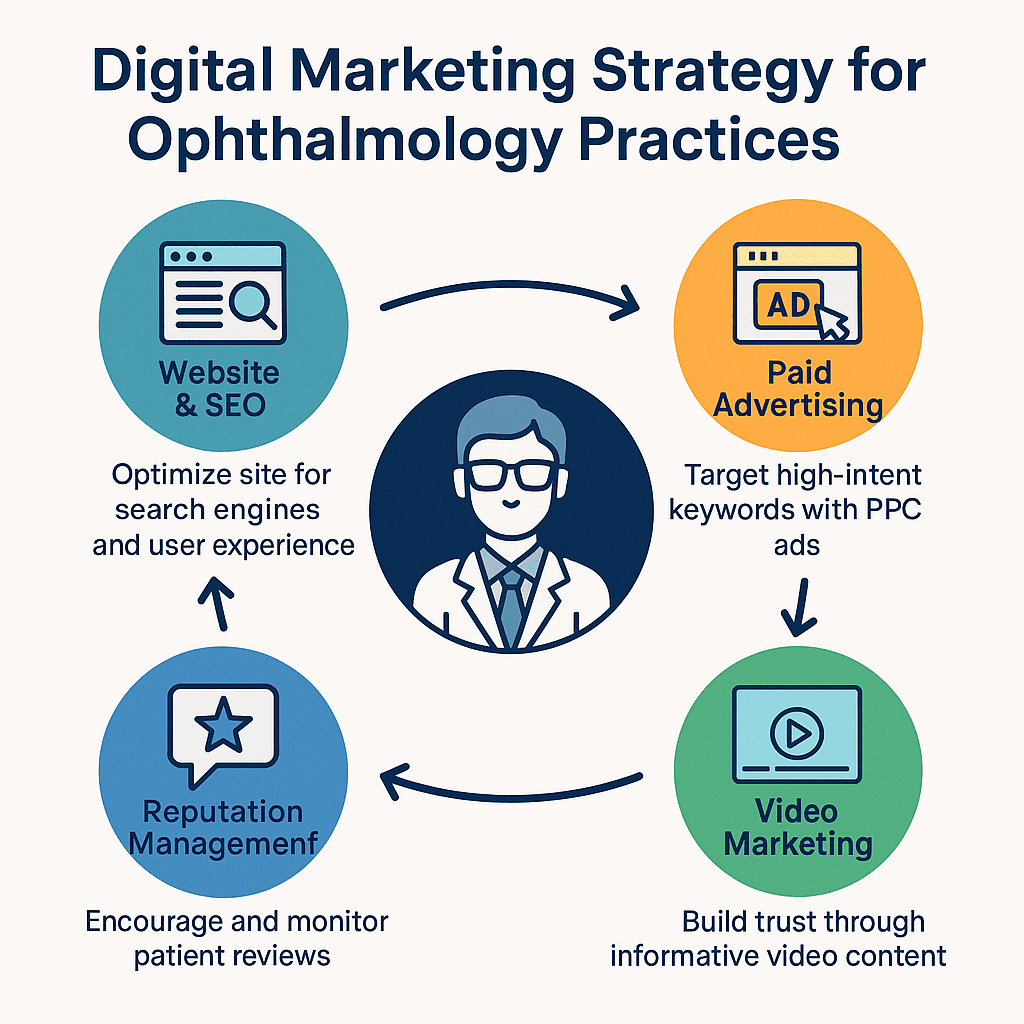
This guide is designed for ophthalmologists and clinic managers who want clarity, control, and consistent results from their digital marketing. Whether you’re expanding surgical services, competing with large providers, or trying to modernize your outreach — you’ll find step-by-step strategies here to improve visibility, build trust, and attract the right patients.
1. Why Ophthalmology Requires a Specialized Marketing Approach
Marketing an ophthalmology clinic isn’t the same as marketing a general eye care or optometry practice.
What Makes Ophthalmology Marketing Unique:
Longer decision cycles: Surgical patients need more time and information
Higher-ticket services: LASIK, cataract surgery, and retina procedures have greater financial risk to the patient
Multiple referral paths: Patients may come from PCPs, optometrists, or self-research
Trust-focused: Clinical authority and reputation matter more than trendy ads
Co-managed care: Marketing must appeal to both patients and professional referrers
If your digital presence isn’t tailored to this patient journey, you’ll lose leads to clinics that feel clearer, more accessible, or more current.
2. Build a Website That Serves Patients and Ranks in Search
Your website is your #1 conversion asset. It needs to attract, educate, and guide — especially when you’re marketing complex, high-value procedures.
Critical Elements of a Strong Ophthalmology Website:
| Page Element | Why It Matters |
|---|---|
| Mobile-first design | Over 60% of patients browse from their phones |
| Individual service pages | Helps rank for keywords like “cataract surgery near me” |
| Embedded doctor bios | Builds trust and supports Google’s “Expertise” criteria |
| Integrated reviews | Adds social proof across the site |
| ADA accessibility | Improves UX and protects your practice legally |
| Conversion-focused CTAs | Clear “Request a Consult” or “Book Now” options |
Don’t treat your website as a brochure. Treat it as a system that helps the right patients make a decision.
See what a high-performing clinic website includes
3. SEO for Ophthalmologists: Get Found Where It Counts
Search engine optimization (SEO) is your long-term growth engine. But ranking for “ophthalmologist near me” is competitive — especially in metro areas.
Key SEO Areas to Focus On:
Local SEO:
Claim and optimize your Google Business Profile
Keep your name, address, and phone (NAP) consistent
Target keywords by city + service (e.g. “glaucoma specialist in Plano”)
On-Page SEO:
Use one focus keyword per page
Include FAQs to target long-tail searches
Add schema markup for medical services
Content SEO:
Write blog posts that answer surgical concerns (e.g., “What to expect after cataract surgery”)
Target seasonal searches like “school vision screenings” or “allergy-related dry eyes”
SEO Performance Checklist:
Every core service has its own optimized page
Your homepage includes your city and specialty in H1 tags
Internal linking connects service, doctor, and location pages
You track keyword rankings monthly
Explore a full SEO strategy for eye care
4. Paid Ads: Reach High-Intent Patients Instantly
While SEO takes time, Google Ads and retargeting can produce patient inquiries right away — especially for high-intent procedures.
How Paid Ads Help Ophthalmology Clinics:
| Campaign Type | Purpose |
|---|---|
| Search Ads | Capture patients searching “LASIK near me”, “cataract surgery cost” |
| Call-Only Ads | Get urgent bookings directly from phones |
| Display Ads | Retarget site visitors across the web |
| Video Ads | Promote doctor trust with testimonials or surgical walk-throughs |
Common Paid Ad Mistakes to Avoid:
Targeting too wide (state instead of zip code)
Sending all traffic to homepage (use procedure pages)
Ignoring negative keywords (e.g., “free,” “DIY,” “training”)
Not tracking calls or conversions
Learn how paid search drives patient leads
5. Reviews and Reputation: The Hidden Growth Lever

Most surgical patients read reviews before booking — especially for LASIK or eye surgery. Yet many practices don’t have a reliable system to request and manage them.
How to Build a Review Strategy That Works:
Ask for a review immediately after a visit or procedure
Use printed QR cards, links in follow-up emails, or automated text messages
Respond to reviews promptly — especially 3-star and below
Monitor Google, Healthgrades, and Facebook regularly
Include reviews on your site using embedded feeds or screenshots
Sample Review CTA:
“Your feedback helps others find expert eye care. Would you be willing to leave us a short Google review?”
Manage your online reputation with less effort
6. Retargeting: Win Back Visitors Who Didn’t Book
Most site visitors won’t convert on the first visit — especially for high-stakes decisions like eye surgery. Retargeting keeps your practice visible.
Retargeting Strategy Breakdown:
| Audience | Ad Type | Goal |
|---|---|---|
| Visited LASIK page but didn’t book | Display or YouTube ad with testimonial video | Build trust |
| Spent time on cataract page | Static ad with “Free Surgical Consult” CTA | Encourage contact |
| Past patient email list | Gmail ad with follow-up tips | Drive re-engagement |
Retargeting keeps your clinic top-of-mind
7. Create Helpful, Educational Content That Converts
Blog posts, videos, and FAQs can attract new visitors and warm up existing leads.
Content Topics That Drive Value:
“Cataract surgery vs laser surgery: what’s the difference?”
“LASIK candidacy checklist”
“Understanding glaucoma: stages, symptoms, and treatments”
“5 questions to ask your eye surgeon before booking”
Where to Publish:
On your blog
Embedded into your service pages
Shared to email lists
Promoted via paid social ads
See sample strategies in our optometry content guide
8. Video Marketing: Accelerate Patient Trust
In a clinical setting, video builds familiarity. It humanizes your team, explains complex procedures, and answers questions patients are too nervous to ask.
Video Types for Ophthalmology:
Welcome video: “Meet Dr. [Name]”
Patient testimonial: “Why I chose LASIK here”
Surgery walk-through: “What happens during cataract surgery?”
Post-op guidance: “What to expect on recovery day 1–7”
Use these on your homepage, emails, paid ads, and blog.
Get help launching a video strategy
9. Align Your Internal Team to Support Marketing
Even the best campaigns won’t convert if your front desk isn’t ready.
What Your Staff Should Be Trained On:
How to respond to website inquiries and chat leads
Using review request systems
Recognizing high-intent leads from ad campaigns
Updating insurance info, hours, and bios online
Collecting FAQs for future blog content
Create a culture where everyone sees marketing as part of the patient journey.
10. When (and Why) to Hire a Marketing Agency
If you’re doing everything manually — or not at all — you’re likely leaving revenue on the table. A specialized marketing agency brings expertise, tools, and time you may not have in-house.
Consider an Agency If:
You want more patients but can’t increase admin workload
You’re not sure what’s working (or why)
You’ve tried SEO or ads and didn’t see results
Your clinic is expanding or opening a new location
You want a strategy, not just tactics
Learn what to expect from a healthcare-focused agency
Marketing That Supports Clinical Excellence
Ophthalmology marketing isn’t about gimmicks — it’s about visibility, trust, and accessibility. When patients can find you, understand your services, and feel confident before they book, you’ve already won half the battle.
With the right digital strategy in place — from your website and SEO to reviews, ads, and retargeting — your practice doesn’t just grow. It grows with stability, structure, and confidence.
Need Expert Help Building Your Marketing Engine?
Visiclix specializes in marketing for eye care clinics — including ophthalmology, LASIK, surgical centers, and multi-location practices. We handle your website, SEO, ads, reviews, retargeting, and video — so you can focus on care.
Schedule a strategy call to see what’s possible.