
Patients choose an optometrist faster when they can confirm three things: whether their insurance is accepted, whether the practice is nearby, and whether booking feels simple. That is why VSP, EyeMed, and plan-specific pages matter. They reduce uncertainty at the exact moment a patient is deciding where to schedule.
For optometry practices, insurance directory SEO for optometrists is not just about showing up in provider directories. It is about making sure VSP, EyeMed, Google Business Profile, local citations, and your own insurance pages tell the same story. Accurate details. Clear benefits language. A direct appointment path.
VSP allows members to search for in-network doctors by ZIP code, while EyeMed’s locator asks users to choose a network, search by ZIP or location, and use filters such as hours, technology, and brands. EyeMed also notes that logging into Member Web gives members exact plan and network results. That means patients are often comparing doctors inside insurance-driven search experiences before they ever reach your website.
What insurance information should patients find before they choose an eye doctor?
Patients should quickly find whether your practice accepts their plan, what type of visit the plan may apply to, and what they should do next. Not buried in a generic FAQ. Not hidden behind “call to verify.” Right there on a clear plan page.
A strong insurance page should explain routine vision exams, eyewear allowances, contact lens benefits, and the difference between vision insurance and medical insurance. This matters because patients often do not know whether a visit should be billed to vision or medical coverage. Routine prescription-related visits are typically handled differently from visits involving eye disease, injury, diabetes-related concerns, infections, cataracts, or other medical diagnoses.
For SEO and conversions, the page should also include location details, accepted plan names, appointment options, and internal links to related services. A practice investing in SEO for eye doctors should treat insurance content as a high-intent landing path, not a back-office detail.
How do VSP and EyeMed directories shape local search behavior?
VSP and EyeMed directories shape patient choice by placing insurance eligibility before brand preference. A patient may start with “eye doctor near me,” but once insurance enters the decision, the question becomes more specific: “Who takes my plan near me?”
That is where directories influence the shortlist. VSP emphasizes finding an in-network eye doctor near the patient, while EyeMed lets users search by location, network, doctor, ZIP code, county, online providers, and filters. These directory experiences train patients to compare convenience, plan acceptance, and local availability at the same time.
Your practice website should support that behavior. For example, a VSP page should not simply say “We accept VSP.” It should answer what patients are likely wondering: Can I book an annual exam? Can I use benefits for glasses or contacts? Should I bring my member ID? Do benefits vary by employer plan? Similar logic applies to EyeMed pages.
That is the gap many competitor articles miss. They compare VSP vs. EyeMed as insurance products, but a local practice needs to rank and convert for plan-specific patient intent.
Why do plan pages improve local SEO and patient trust?
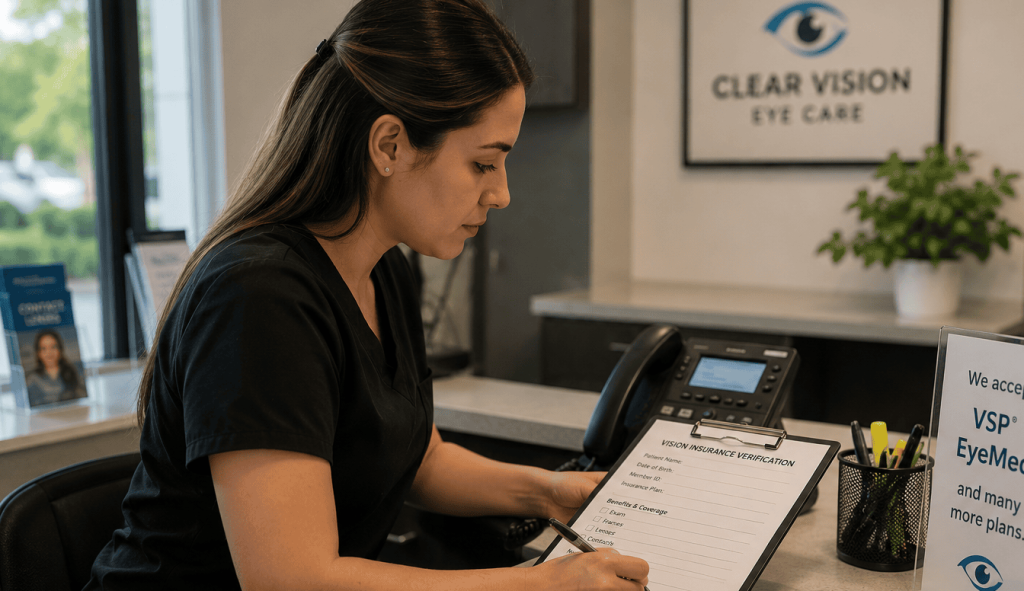
Plan pages improve local SEO because they give search engines and patients more specific information about your services, accepted insurance, location, and appointment process. Google’s own SEO guidance explains that SEO helps search engines understand content and helps users decide whether to visit a site.
A plan page also supports local relevance. Google says local results are mainly based on relevance, distance, and prominence. Complete and accurate business information can help Google better understand a business and match it to local searches.
A useful plan page should include:
- Accepted plan name, such as VSP or EyeMed
- Services commonly connected to the plan
- City or service-area context, written naturally
- Appointment CTA
- Insurance verification note
- Links to eye exam, eyewear, contact lens, and billing information
Simple. But powerful.
When combined with reputation management and local citations, these pages also help reinforce NAP consistency, patient confidence, and local discovery across directories.
How should optometrists compare VSP, EyeMed, and practice-owned plan pages?
Optometrists should compare these assets by function. VSP and EyeMed directories help patients confirm network access. Google helps patients compare nearby options. Your website helps patients understand the visit and book.
Here is the practical comparison:
VSP and EyeMed directories are discovery tools. They help patients find in-network providers, but the practice has limited control over the experience.
Google Business Profile is a local trust layer. It shows location, hours, reviews, directions, and calls.
Practice-owned plan pages are conversion assets. They can explain benefits, reduce confusion, answer objections, and guide the patient to schedule.
PPC landing pages are speed tools. They work best when a patient clicks an ad for “eye exam with VSP” or “EyeMed optometrist near me” and lands on a page that exactly matches that intent.
That is where PPC Google Search Ads and insurance SEO should work together. Paid search can capture immediate demand, while organic plan pages build long-term visibility.
What should an optimized insurance plan page include?

An optimized insurance plan page should answer the patient’s question first, then guide them toward booking. No jargon wall.
Start with a direct statement: “Yes, our practice accepts [Plan Name], and our team can help verify your benefits before your visit.” Then explain what the plan may cover, what varies by employer or member plan, and when medical insurance may be involved.
Add a short verification process. For example: bring your insurance card, member ID, date of birth, and any medical insurance information if the visit may involve symptoms or eye health concerns. This helps prevent billing confusion and makes the office feel organized.
The page should also use strong internal links. Send patients to your eye exam page, contact lens page, eyewear page, and appointment page. From a marketing perspective, connect the page to broader digital marketing services for eye care so the content fits into the full patient acquisition system.
How can structured data and internal links support insurance directory SEO?
Structured data and internal links help search engines understand your practice, pages, and relationships between services. Google explains that Local Business structured data can identify business hours, departments, reviews, and other business details for eligible search features.
For optometrists, structured data should not replace clear page copy. It should support it. Your website still needs readable content about accepted insurance, services, locations, and appointment steps.
Internal links matter too. Google says links help it discover pages and understand relevance, and anchor text should be descriptive.
So instead of linking with “click here,” use natural anchors such as “optometry SEO services,” “local citation management,” “website design for eye care,” or “Google Ads for optometrists.” Visiclix’s website design and hosting service is especially relevant here because insurance pages need to load quickly, work on mobile, and make booking easy.
Are insurance pages useful for PPC campaigns?
Yes. Insurance pages are highly useful for PPC because they match high-intent searches with a specific answer. A patient searching for an EyeMed or VSP optometrist is usually closer to booking than someone casually researching eye health.
That said, the landing page must be specific. A generic homepage may force the patient to hunt for insurance details. A plan-specific landing page gives them confidence immediately.
For example, a PPC campaign can send VSP-related keywords to a VSP page, EyeMed-related keywords to an EyeMed page, and general “vision insurance accepted” keywords to a broader insurance page. Cleaner match. Better experience. Stronger conversion path.
This also helps practices measure which insurance-related searches generate calls, forms, and appointments. With Visiclix marketing packages, SEO, PPC, Google Business Profile, maps visibility, and review management can be coordinated instead of treated as separate campaigns.
FAQ
What is insurance directory SEO for optometrists?
Insurance directory SEO for optometrists is the process of improving how an eye care practice appears across insurance directories, local search platforms, citations, and plan-specific website pages. The goal is to help patients confirm coverage and book with confidence.
Should every optometry practice have VSP and EyeMed pages?
If the practice accepts VSP or EyeMed, dedicated pages are usually helpful. They answer plan-specific questions, support local SEO, and create better landing pages for PPC campaigns.
Do VSP and EyeMed directory listings replace local SEO?
No. Insurance directories help patients find in-network doctors, but they do not replace Google Business Profile, website content, reviews, citations, or conversion-focused landing pages.
What is the difference between a directory listing and a plan page?
A directory listing helps patients find your practice inside a third-party insurance platform. A plan page lives on your website and gives you more control over messaging, explanations, internal links, and booking calls to action.
Can insurance pages help patients choose faster?
Yes. Patients often hesitate when they are unsure about coverage, costs, or billing. A clear insurance page removes doubt and gives them a next step.
Make Insurance Search Easier Before Patients Call
Patients do not want to decode insurance. They want to know whether they can use their benefits, whether your practice is convenient, and whether booking will be simple.
That is the real value of VSP pages, EyeMed pages, and insurance directory SEO. They meet patients in the decision stage. They clarify the next step. And they help your practice turn local insurance searches into scheduled appointments.
Why Visiclix is Your Ideal Choice for Insurance Directory SEO?
Visiclix specializes in digital marketing for optometrists, ophthalmologists, and eye care practices. The team understands how patients search for eye care, how insurance questions affect booking decisions, and how local SEO connects with real appointment growth. Through optometry SEO, local citations, web design, PPC, and review management, Visiclix builds strategies around visibility and conversion.
Visiclix also brings more than 25 years of digital marketing experience and focuses on custom strategies rather than one-size-fits-all campaigns. The team emphasizes transparent reporting, real-time performance tracking, and monthly strategy calls, which helps practices understand what is working and where opportunities remain. For insurance-driven searches, that level of clarity matters. Patients need confidence, and so do practice owners.
Grow Your Practice With Visiclix
If your practice accepts VSP, EyeMed, or other vision plans, your insurance pages should be doing more than listing logos. They should help patients choose you.
Contact Visiclix to build a stronger local SEO, insurance directory, and PPC strategy for your eye care practice.