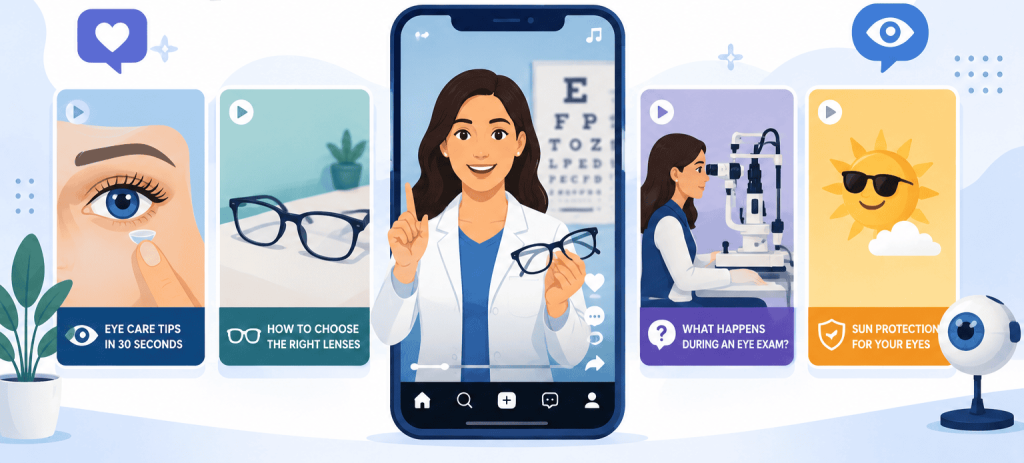
Optometrists should create short videos that answer common patient questions, explain eye care in simple terms, reduce uncertainty about appointments, and make the doctor behind the practice more familiar. Strong formats include doctor-led FAQs, eye condition explainers, myth-versus-fact clips, exam walkthroughs, technology demonstrations, and short introductions to the doctor or team.
The best short form video for optometrists is not necessarily the idea getting the most views on another practice’s account. It is the video that solves a real communication problem for your patients. Start by asking what people repeatedly misunderstand, hesitate over, or ask before booking. That gives each video a useful job instead of filling a content calendar for the sake of posting.
How Should an Optometrist Decide Which Video to Create First?
Start with the business or patient problem you want the video to address. A practice trying to introduce a new diagnostic service needs different content from one trying to make first-time patients more comfortable.
A simple decision guide can help:
| If your practice needs to… | Create this type of video |
| Answer a repeated patient question | Doctor-led FAQ |
| Explain a confusing eye condition | Short educational explainer |
| Reduce hesitation before an appointment | What-to-expect video |
| Introduce technology or a specialty service | Doctor-led demonstration |
| Build familiarity with the practice | Meet-the-doctor or team video |
| Turn attention into appointments | Service video with one clear CTA |
Do not start with a list of trends. Start with actual questions from phone calls, consultations, online reviews, social comments, and your front desk team. Visiclix’s 90-Day Optometry Marketing Plan follows a similar principle at the campaign level: choose a clear objective before piling on tactics.
What Doctor-Led Educational Videos Are Most Useful to Patients?
The most useful educational videos answer one specific question at a time. An optometrist could explain why eyes sometimes water when they feel dry, what happens during a dilated eye exam, why contact lens prescriptions differ from glasses prescriptions, or when a parent may want to schedule a child’s eye exam.
The doctor’s role matters here. Instead of turning the clip into a miniature lecture, speak as though one patient asked the question in the exam room. Give the answer first, explain only what is necessary, and avoid technical terminology that does not help the viewer make sense of the issue.
This format also works well for misconceptions. “Does sitting close to a screen damage your eyes?” is more inviting than a generic video titled “Digital Eye Strain Facts.” Specific questions give viewers an immediate reason to keep watching.
Which Videos Can Help a Patient Feel Ready to Book?
Some patients do not need more education about eye care. They need to know what will happen if they choose your practice.
That makes appointment walkthroughs, new-patient videos, brief office tours, doctor introductions, and equipment demonstrations useful. A patient considering a specialty service may want to know whether a test is uncomfortable, how long the visit may take, what the equipment does, or what happens after the doctor reviews the results.
When showing unfamiliar technology, translate features into patient relevance. Visiclix’s Eye Care Technology Marketing Guide recommends focusing on what the technology means for the patient rather than leading with equipment names and technical specifications. That principle fits short video especially well.
When Should Optometrists Create Trust-Building Videos Instead of Educational Videos?
Create trust-building content when the viewer’s main question is not “What does this mean?” but “Would I feel comfortable going here?”
A simple doctor introduction can often do more for that question than another polished promotional graphic. Talk about why you chose eye care, what you enjoy helping patients understand, how your team approaches appointments, or what patients can expect when they walk through the door. Behind-the-scenes clips and team introductions can serve the same purpose.
The tone should feel professional without becoming stiff. A phone, a quiet room, good lighting, and a clear point are often enough. Visiclix’s approach to social media marketing for eye care practices also emphasizes patient engagement and practice visibility rather than treating social media as a stream of generic posts.
How Should a Short Optometry Video Be Structured?
A useful short video usually needs four things: a question, a direct answer, a brief explanation, and a next step.
For short form video for optometrists, open with the concern itself. “Why does my prescription keep changing?” is stronger than “Today we’re going to talk about prescriptions.” Answer promptly, then add the one or two details the patient needs to understand your point.
Film vertically when the content is intended for short-video feeds. Keep the doctor’s face and important on-screen text away from interface areas that may cover them. Clear audio, readable captions, and soft, even lighting matter more than elaborate production.
Then finish according to the video’s purpose. An educational clip may ask people to save it. A service explainer might direct them to learn more. A video created for patients closer to booking can point them toward an appointment page. Visiclix’s guide to YouTube Ads for Optometrists similarly stresses connecting video attention with meaningful actions rather than treating views as the final goal.
Where Should Optometrists Publish Their Short Videos?
Instagram Reels, Facebook Reels, TikTok, and YouTube Shorts can all support short doctor-led content. The practice does not need a completely separate filming strategy for every platform.
Record a strong vertical master version, then adapt the caption, opening text, CTA, and other details for each channel. Avoid reposting content with another platform’s watermark when you have access to the original file.
Useful clips can also support website content. A short explanation of a diagnostic test, for example, may fit naturally on a related service or technology page. That allows one recording session to support social media, patient education, and broader digital marketing for an eye care practice.
How Can a Busy Optometrist Produce Enough Videos Without Constantly Filming?
Batching is usually more practical than trying to film every time an idea appears.
Ask your team to collect six patient questions over a week or two. Set aside one recording session and answer each question as a separate clip. Keep each answer focused so editors can trim pauses, add captions, and prepare the videos without having to rescue a long, wandering recording.
Then watch what happens after publication. Which topics produce saves? Which generate useful comments? Which send people to the site or lead to appointment activity? Strong topics can become follow-up videos rather than forcing the practice to constantly invent something new.
This also keeps video connected to a larger marketing plan. One useful patient question can inform a social clip, website FAQ, search campaign, email, or future article.
What Should Optometrists Avoid in Doctor-Led Short Videos?
Avoid trying to diagnose an individual viewer through a public video, comment, or direct message. Educational content should explain general information and make it clear when a proper examination is needed.
Be equally careful when filming inside the practice. Patient names on screens, paperwork, conversations in the background, images, and identifiable patients can create privacy problems. Practices subject to HIPAA should have appropriate safeguards and obtain required authorization before publicly using protected health information.
Skip exaggerated promises too. A short video does not need dramatic claims to earn attention. Specific, understandable information from a real eye doctor is already valuable.
Finally, do not cram five ideas into 30 seconds. One question. One answer. One useful next step. Much cleaner.
FAQ
How long should an optometrist’s short-form video be?
Make the video as long as needed to answer one question clearly, but no longer. Many doctor-led FAQs can work in well under a minute. More detailed explanations may need extra time. The priority is not reaching a particular second count. It is removing anything that does not help the viewer understand the answer.
Should optometrists appear on camera themselves?
Yes, when the topic benefits from professional explanation, reassurance, or familiarity. A doctor’s presence can be particularly useful for FAQs, misconceptions, service explanations, and appointment-preparation videos. Not every post needs the doctor, though. Staff, equipment, graphics, and practice footage can add variety.
What should an optometrist’s first five videos be about?
Start with five questions patients already ask. Good candidates might include what happens during a comprehensive eye exam, how often eye exams are needed, what dilation does, why contact lens exams differ, and when persistent eye discomfort deserves professional attention. Adjust the list to your actual patient population and services.
How often should an optometry practice post short videos?
Choose a schedule the practice can sustain without sacrificing quality or clinical responsibilities. A smaller number of useful, consistent videos is more practical than posting frequently for several weeks and then stopping. Batching several clips at once can make regular publishing easier.
Can one video be used on Instagram Reels, TikTok, and YouTube Shorts?
Usually, yes. Starting with a clean vertical video makes reuse easier. Before publishing, adjust captions, text placement, calls to action, music, and other platform-specific elements where necessary. Keep the original video file rather than relying on a downloaded copy carrying another platform’s branding.
Start With the Questions Patients Already Ask
The next video idea may already be sitting at your front desk.
Listen for the question patients ask three times in one week. Notice the service people struggle to understand. Look at the point where new patients seem uncertain. Those moments are better content prompts than a random trend because they come directly from the people your practice serves.
Start there. Put the doctor in front of the camera, answer one useful question clearly, and give the viewer an appropriate next step.
Why Visiclix Is Your Ideal Choice for Short Form Video for Optometrists?
Visiclix specializes in marketing for optometry, ophthalmology, and eye care practices, so video strategy does not have to sit apart from the rest of your patient-acquisition work. Content can be planned around the services you want to grow, the questions patients are asking, and the channels most likely to support those goals.
The Visiclix team also works across video production, social media, SEO, paid search, websites, and digital advertising. That broader view matters because a useful doctor-led video can do more than fill a social feed. It can support patient education, strengthen service pages, feed future campaigns, and help your practice communicate more clearly across the patient journey.
Put Your Doctors on Camera With a Clearer Plan From Visiclix
Useful video starts with the right question and a reason for creating it. If your practice wants a more structured approach to video and digital patient acquisition, contact Visiclix to discuss a strategy built around your services, audience, and growth goals.